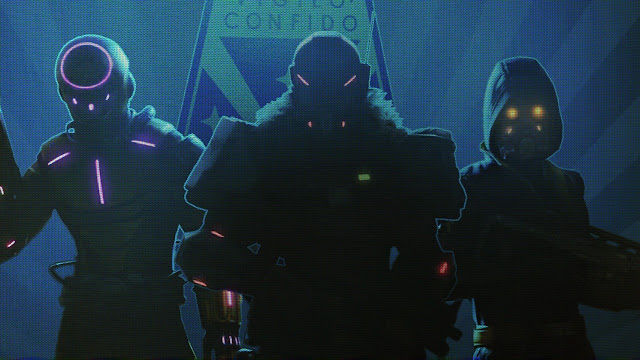
War of the Chosen adds three new classes to the game, which don't function like the prior classes.
You can't promote Rookies into them, for starters, or otherwise change a soldier into one. Nor are they manufactured like SPARKs. Instead, they're associated with the new Resistance Faction mechanics, which is a bit complicated to get into; for one thing, the details depends on if you have The Lost And Abandoned turned on or not, and further depends on if you mess around with Advanced Options.
If you have all of that off, what happens is the game assigns a random Resistance faction for you to start in contact with, and whichever faction you're in contact with will get you a free soldier of that class. If you also have the tutorial off, they'll actually deploy in the very first mission with your Rookies! (Replacing a Rookie, to be clear) From there, you'll need to do Covert Ops to make contact with and build up your relations to the other Resistance Factions, who will each gift you one free copy of their associated class as part of the contact process.
You want more than one soldier of a Resistance class? You'll need to be offered a Covert Op to be given one... and you can't even undertake such Covert Ops unless your relationship with a Resistance Faction is rated High. Furthermore, the game is stingy, and will normally only offer you such operations if you've gotten your current soldier killed or captured and so need a replacement. You can relatively readily get a second copy of whichever soldier type you started with, but no more than that. (Unless you pop into DefaultGameData and change 'MaxHeroesPerFaction=2' to a higher number, anyway)
As such, you're not going to be fielding an entire team of Reapers under normal circumstances, and you should be careful to avoid losing your Resistance Faction troops, since burning a Covert Operation on recruiting a replacement is Covert Op time you could have spent on something else.
Strictly speaking, it's possible to get more or less as many copies of a Resistance class as you want, because captured soldiers can be retrieved via Covert Ops. Thus, if you get your Reaper captured, then recruit a new one, then get that one captured, then recruit a new one, and so on, you can recruit an arbitrarily large number and then rescue them all so you actually have them all at once. This would be a huge pain to actually do, though, and frankly you're probably better off looking into the modding scene or messing around with the config files if you care that much.
If you have Lost and Abandoned on, you'll instead start with no Resistance class at all, but fairly early in the campaign you'll be put in contact with the Reapers and perform a mission that gives you a Reaper and also gives you a Skirmisher, but has the Skirmisher instantly captured, requiring a Covert Op to acquire him properly, with said Covert Op doubling as the Skirmisher-contacting one. This actually makes for a harder start than having Lost and Abandoned off, which is a bit bizarre given turning Lost and Abandoned on forces some degree of tutorialing onto you.
The third scenario is you go into Advanced Options when starting a game and pick one of three options: Templar start, Reaper start, or Skirmisher start. This is functionally identical to having none of these Advanced Options on, but minus having to bother startscumming to get whoever you want.
Then there's the consideration of leveling. Resistance classes don't level precisely like X-COM soldiers do, and I went into the Training Center before Resistance classes because their behavior is more readily understood in the context of the Training Center.
First of all, Resistance classes don't get 'free' skill purchases. They always spend Ability Points to acquire skills. In exchange, they have modified Ability Point gain rates, and in turn their Combat Intelligence AP gain rate modification works differently; at Above-Average they gain less than 10% more than the usual AP per level (1.083 as the multiplier, specifically), at Gifted they gain a bit over 15% more than the usual (1.167 for the multiplier), at Genius they gain exactly 25% more than the usual, and at Savant they gain 50% more than the usual. The game consistently rounds down, and does not keep track of fractional points; an Above Average Resistance soldier will actually gain the same amount of Ability Points as an Average one at Corporal, for example, and only 1 more at Sergeant.
If you read the config file you'll get a whole description of 10 points +2 more per rank up, which is... sort of accurate. You do indeed start from a base of 10 points, and gain more for further ranks. The actual details are completely arbitrary, though, and that +2 per rank bit in particular is only true of one rank. In the following space the #/#/#/#/# layout is the number of Ability Points a soldier gains at that rank if Average/Above Average/Gifted/Genius/Savant;
 No gain; Resistance classes start at Squaddie as a baseline.
 10/10/11/12/15
 16/17/18/20/24
 17/18/19/21/25
 19/20/22/23/28
 20/21/23/25/30
 32/34//37/40/48
An Average Resistance soldier gains a lifetime supply of 114 Ability Points, enough to purchase 10-ish skills if none of them costs 25 points. (You're expected to buy at least one that costs 25 points; Colonel skills on Resistance soldiers cost 25 points, not the 15 they cost on core class soldiers) An Above Average soldier gains 6 points over that; this is basically noise, and it's entirely justified to think of Average and Above Average as identical. Gifted soldiers are 16 points ahead of Average soldiers; enough to buy at least one additional skill with points left over. Geniuses are 27 points ahead of Average soldiers, which is enough to purchase two skills with points to spare, or nearly three cheap ones. And of course the coveted Savants have 56 extra points to throw around, letting them cram in 4 or so extra skills.
If you're lucky enough to get a Savant Resistance soldier, don't let them die! They're really powerful, and ludicrously rare.
Correlated to all this is that Resistance classes don't need the Training Center to engage in Training Center behavior. They can buy old skills, and can even skip buying from a rank entirely if you feel like! (Though it should be noted that the game doesn't really like it when you fail to buy anything from a rank, with UI oddities tending to occur until they level anew) Conversely, while Resistance classes have an 'X-COM lane' of randomized bonus skills like the core classes, they don't actually have access to the usual range of such skills, instead having their own specific, much more narrow sets of skills, which can actually include skills not strictly found on X-COM troops at all. They still get assigned a randomized number of such skills at random ranks with rank-based costs except where it's a fixed 25 AP, but there's not nearly as much variety if you do a lot of runs as there is with core classes. They also actually get 2-5 such skills, oddly, instead of the 4 that core classes consistently get, with this high peak contributing to the lack of variety; for example, Reapers only have 6 possible bonus skills, meaning two Reapers who roll 5 bonus skills are guaranteed to share at least 4 of their bonus skills.
Resistance classes also actually get three non-X-COM 'lanes'. Most levels only use two of them, but they can totally have three personal skills in one level. They also break from costs at Colonel, with every personal Colonel skill costing 25 points instead of the usual 15 points, as I alluded to earlier. In any event, for the Resistance class posts I'll label on each individual skill which lane the game places it under, specifically placing the lane's name to the right of the icon, vs the skill's own name below the icon in bold.
-----------------------------------------------------
Narratively/aesthetically, a subtle-but-interesting aspect of the Resistance classes is they seem to be setting up for an Apocalypse-style situation, as far as major/memorable political forces/distinctive combat types.
In Apocalypse, there were three types of Agent: basic Humans, Hybrids that were products of Alien experimentation from the original game, and Androids were, you know, robot people. Basic Humans were generic and versatile, Hybrids were the best at psionic abilities but not so great at conventional combat, and Androids were strong, immune to psionic abilities but unable to use them, and couldn't engage in conventional strength training. On the political layer, Hybrids and Androids were both minorities being discriminated against; Hybrids get a bad rap because they're associated with the prior Alien invaders, and Androids are basically a slave population made from steel and plastics that want to be granted the same kinds of rights as biological sorts.
In War of the Chosen, the Reapers broadly fill the role of regular Humans from Apocalypse in terms of themes: they're unmodified humans using regular human technology, no wacky futuristic technology or superpowers to define them. The Skirmishers fulfill the Hybrid position as far as being Alien/human hybrids who are discriminated against, while the Templar handle the psi specialty part of that role, most likely because the Firaxis X-COM games place psionics in a more mystical sort of context than the Gollop X-COM games, where psychic ability is treated as more fundamentally a weird quirk of biology.
As for an Android equivalent... well, there's evidence that Julian of Shen's Last Gift was intended to head a faction of robots. The most conspicuous bit of evidence remaining in the game itself is that Covert Ops can refer to the idea of a bunch of robots in the wilderness, but there's assorted secondary circumstantial evidence that a fourth faction was planned in general. That would've been a S.E.L.F. analogue right there.
There's other parallel considerations, such as how War of the Chosen broadly has an idea of the Resistance factions not getting along and the player having to court them to get their help, which is pretty core to the mechanics of Apocalypse. There was actually a bit in playing the game where I was under the impression I would be forced to take sides or commit to a single favorite faction, even. War of the Chosen itself doesn't do a lot with this idea, and it's ambitious enough and has enough incompletely implemented content this may just be a casualty of that, but it's also possible this was deliberately setting up for an Apocalypse-esque situation in a sequel, with no intention to have War of the Chosen delve much into it itself.
I'm inclined to suspect the latter in part because of a bunch of other decisions that seem distinctly odd if I don't slot them into that context. For example, the endgame cinema paints a picture of ADVENT remaining existent and powerful and still in control of the city centers, albeit no longer in full control of Earth's population, which in isolation seems a fairly curious decision, essentially making your 'victory' over the Ethereals more or less pointless. However, Apocalypse is premised around the basic idea of a dystopian world in which the government is incompetent at best and more likely fairly corrupt, and it would be difficult for an XCOM 3 to replicate this if ADVENT was removed from the picture and X-COM/the Resistance was assumed to heroically rebuild the world's governments without doing something either very strange or even more narratively self-destructive, like having X-COM as an organization promptly turn super corrupt so they can fill the role of Dubious Governmental Authorities. Which given the series is called XCOM, it's kind of a given the series is going to keep having the player be in command of X-COM, and the Firaxis games seem unlikely to position the player as actively being The Problem With The World. (Where Apocalypse was actually fairly agnostic as to whether X-COM was a force for good in Mega-Primus; you were for-sure a force against alien invasion and so were by default doing a certain amount of good for humanity, but everything else was at the player's discretion)
Anyway, if XCOM 2/War of the Chosen is setting up for an XCOM 3 that parallels Apocalypse, then keeping ADVENT around to act as the Dubious Governmental Authorities is a much more natural decision. They could alternatively or additionally fill a role similar to the Cult of Sirius in Apocalypse of being the only fundamentally hostile faction that isn't the new invaders, such as by having a sub-group of ADVENT citizens who even when knowing what the Ethereals did and all still believe Aliens are superior beings etc.
And in conjunction with War of the Chosen setting up a relationship system with the Resistance factions (Albeit a somewhat simplistic one), and setting them up to have a certain degree of mistrust and hostility to each other... I find it plausible this is laying the groundwork for an Apocalypse-style political landscape to navigate on the Geoscape.
On a tactical level, the introduction of the Lost is easy to hook into this theory as well: while on the face of things they're just standard horror zombies But In XCOM, in terms of mechanics they're a separate faction type that can actually fight both the player and the primary enemy faction. That's something Apocalypse did, where you could end up simultaneously fighting aliens and local humans, be they gangs, the Cult of Sirius, Marsec, or even Megapol if you provoked them enough. Given Enemy Within quite obviously was prototyping a lot of the concepts that show up in XCOM 2 and War of the Chosen, and how the Alien Rulers have shades of being a prototype of the Chosen... it's not unprecedented for the Firaxis XCOM games to get a rough draft version of a mechanic out prior to refining it and hooking it into the core of the game more properly. It's quite plausible the Lost are meant as a crude prototype for representing multiple factions on a battlefield.
It's also interesting to note how there's a number of parallels between the Chosen and the Resistance factions, enough so to make me wonder if they're both prototyping different chunks of a combined factional concept. I can readily imagine XCOM 3 merging the two systems together to create generally-friendly factions you can recruit allies from (Much like how S.E.L.F. needed to be friendly to you to recruit Androids in Apocalypse, and the Mutant Alliance needed to be friendly to recruit Hybrids) who have distinctive leaders that have randomly-generated qualities, maybe even having those qualities exert influence on the Geoscape level, alongside generally-or-always hostile factions of aliens with distinctive leaders with randomly-generated qualities. That would be both very much alike to Apocalypse and yet very distinct, and would be in line with how XCOM 2 was clearly designed with an eye toward making runs a little more distinct from each other (Randomizing Continent Bonuses, the Dark Event system) and War of the Chosen pushed that angle even harder. (Chosen having randomly-generated-per-run Strengths and Weaknesses, even more randomness to Continent Bonuses, Breakthroughs, Inspirations, Resistance Orders being randomly-generated persistent benefits...)
Even before I got a hold of the game myself I'd run across examples of people assuming XCOM 3 would be an Apocalypse parallel, but I'd found that pretty dubious until I was playing War of the Chosen in particular since XCOM 2 is not a Terror From the Deep parallel, in spite of having a few cute callbacks. However, War of the Chosen really does stack up a lot of interesting evidence in that direction, and I'm quite curious as to what XCOM 3 is going to be like if this is indeed representative of the direction it'll go.
-----------------------------------------
But back to XCOM 2: next time, we cover our first Resistance class properly, the Reaper.
See you then.