
Like Dwarves, Elves can get a Morale bonus for all-inning on their kind. As far as their racial relations...
 -2 Morale for Demonic presence in allies.
 -3 Morale for Undead presence in allies.
 -1 Morale for Dwarven presence in allies.
... they're basically a mirror image of Dwarves, only hating Undead more than Demons instead of the other way around like Dwarves do. Which fits to plot stuff, given that Dwarves have an ongoing problem/history with Demons, while Elves have an ongoing problem/history with Undead.
Of course, Elves get a few Tolerant units, letting a player work around that issue even before they get Tolerance 1 themselves, so in The Legend Elves are arguably easier to please all-around than Dwarves.
And as you'll see, Elves have actual unit variety and more consistent unit quality.
(They still have flawed unit design, mind)

Lake Fairy
Level: 1
Hiring Cost: 16
Leadership: 7
Attack/Defense: 3 / 3
Initiative/Speed: 6 / 5
Health: 6
Damage: 1-2 Magic
Resistances: 25% Magic
Talents: None
Abilities: Soaring, No retaliation, Magic Resistance (25% Magic resistance), Fairy Dust (Melee attacks have a 30% chance of inflicting Weakness for one turn)
I don't usually talk about items, but it's worth commentary in the case of Lake Fairies, Sprites, Dryads, and the still later Demoness that Anga's Ruby is a thing in the game. It provides massive boosts to 'female' units, and the four I just mentioned are all the units considered to be female in The Legend. If you get a hold of Anga's Ruby in a given run, female units are worth considering giving a second look if you've been largely ignoring them.
I'll also take this opportunity to talk about Soaring, as it's a bit of an odd Ability. On many battlefields against many units, it does essentially nothing. However, some normally-impassible terrain can be soared over (Usually either short blockages like vines, or pits), a handful of Talents interact with Soaring (eg the previously-covered point that Earthquake on Giants doesn't work against Soaring units), and it ensure the units will never activate a Trap, period. I've thus neglected to provide a description on individual units, because it's this weird grab-bag that usually can be ignored entirely. Oddly, later games don't do a lot to make Soaring more relevant. Some things, here and there, but it's fairly rare.
Lake Fairies themselves are tricky units to make use of. They're lightning-fast, hit hard, get No Retaliation making their glass cannon status workable, and the bonus of potentially inflicting Weakness on enemies is a nice... well, bonus... but if there's ranged attackers you can't lock down or high Speed/Initiative units on the enemy side (eg Horsemen, Dragons of any stripe) they tend to take casualties fast, rapidly degrading their damage. They're an okay unit for using Time Back with, and unlike some of the glass cannons out there they're easy to Resurrect thanks to their low Level, so even those issues are manageable, but they're still worth commentary.
Ultimately, the primary issue Lake Fairies have is that the game doesn't tend to give you access to any until late in the game when you have access to a variety of other units. Most notably, it's actually possible to enter Demonis before going to the Elf lands, and indeed depending on your luck with battlegroup generation et al it may be easier to reach Demonis than to hit the plot gate that opens access to the lands of the Elves, at which point Lake Fairies have essentially been preempted by Imps and Scoffer Imps, which are better able to function as No Retaliation melee harassment and throw in Fireballs and, in the Scoffer Imp's case, Sneer. Combined with the distribution of quality in races making it so that running Demons isn't necessarily a Morale burden, and it's fairly common for a run to just never have it sensible to try them out. It's too bad, because The Legend's usage of Action Points means that, where Fairies in the classic Heroes of Might and Magic games look usable and are honestly fairly terrible, Lake Fairies in The Legend actually do have a lot of potential within the system. They're just overshadowed by other units.
As enemies, they can be surprisingly maddening to face. Magically resistant units generally don't serve well as frontline tanks, their access to Soaring often makes natural chokepoints not function as chokepoints for fighting them while simultaneously denying you Traps as a way to delay them, and their dynamic of being fast but fragile ends up making them startlingly dangerous as enemy Leadership values increasingly climb above the player's in the late game (ie when you're generally going to be facing them most) compared against slower, more durable melee like Swordsmen, because a slow/low Initiative unit is easy to Slow/Shock/Stun/otherwise prevent it from covering much ground per turn, buying you more turns to wear it down before it does anything to you. Lake Fairies will generally be hitting you on the second turn, if you aren't doing something like using Beholders to stunlock them with Paralyzing Ray, or repeatedly Blind them.
Overall, I actually like Lake Fairies, and just wish The Legend did a better job of giving the player motive to use them in real play.

Sprite
Level: 1
Hiring Cost: 20
Leadership: 8
Attack/Defense: 4 / 2
Initiative/Speed: 5 / 4
Health: 8
Damage: 1-3 Magic
Resistances: 25% Magic, -50% Fire
Talents: Dispel (Charge: 1. Dispels all positive and negative effects on a single unit, ally or enemy)
Abilities: Soaring, No retaliation, Magic Resistance (+25% Magic resistance), Vulnerable to fire (-50% Fire resistance)
Note that their Dispel Talent is effectively the Spell, Dispel, at level 2.
Sprites are largely indistinguishable from Lake Fairies for most purposes. Overall they're a bit slower, a bit more bulked out (More Health for the Leadership and all, though not enough to substantially change how you use them), but ultimately in most situations what sets them apart is their Fire weakness and their access to Dispel. As player units, these qualities tend to favor them over Lake Fairies, as the player doesn't go into every fight expecting Fireballs to nuke their units, whereas getting to burn a unit's turn on Dispel rather than your Spellbook usage can be a huge deal. (Not even getting into the possibility you don't yet have Order Magic 2) As enemy units, it tends to be to their disfavor. The Fire weakness makes it easy for Mages to simply nuke them, and even Paladins and Warriors may take advantage, and the AI doesn't really understand Dispel. If some ally ends up Burned or Poisoned, Sprites will almost always waste their Dispel on canceling that, not even bothering to move closer to your forces. This hurts their time to engagement far more than their lower Speed and Initiative, compared to Lake Fairies.
Thankfully, later games put more effort into distinguishing Sprites and Lake Fairies.
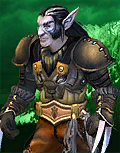
Werewolf Elf (Elf form)
Level: 3
Hiring Cost: 160
Leadership: 60
Attack/Defense: 16 / 16
Initiative/Speed: 5 / 2
Health: 45
Damage: 7-9 Physical
Resistances: Generic.
Talents: Transformation (Reload 2: Switch forms)
Abilities: Blades (Melee attacks inflict Bleeding. Does not trigger when counterattacking), Night Sight (+50% Attack at night or underground), Regeneration ('Top' unit regenerates to full health at the start of the stack's turn), Tolerance (No Morale penalty from Undead allies)
Note that transforming clears all ongoing effects, positive or negative. This can be useful/annoying when it comes to negative effects, and when it comes to positive effects it means you should try to transform and then apply, not apply and then transform.
I really love Werewolf Elves in terms of 'fluff'. It's extraordinarily rare for fiction to actually implement such obvious non-human/non-human combination, even when it's explicitly stated somewhere that eg 'the Werewolf disease can infect any humanoid'. The Legend giving us Werewolves that are Elves in specific is fantastic.
It's a bit unfortunate the racial mechanics are a bit underwhelming, but still.
Bleeding is, in The Legend, the pretty lackluster effect of lowering the target's Attack and Defense by 30% for one turn. Werewolf Elves in Werewolf form are also literally the only way to induce this effect in this entry, and it's not a particularly ideal way of trying to use Werewolf Elves, so in practice Bleeding is a curiosity. It... takes a couple games for Bleeding to get more relevant and interesting...
Anyway, Werewolf Elves in Elven form are fairly unremarkable units. The player can't get them early enough for their Regeneration to be a particularly notable advantage, though they can fight Werewolf Elves early enough for it to be obnoxious, and you're basically looking at a generic 2-Speed melee unit. I've already indicated those aren't very effective, and they really aren't. Usually, you'll be using a Werewolf Elf to Transform it into...
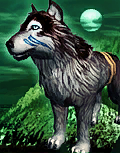
Werewolf Elf (Wolf form)
Level: 3
Leadership: 60
Attack/Defense: 16 / 10
Initiative/Speed: 5 / 4
Health: 45
Damage: 5-8 Physical
Resistances: Generic.
Talents: Wolf Cry (Charge: 1. All enemy Humans, Elves, and Dwarves of Level 1-2 are hit with Fear, and additionally have a 50% chance of skipping their next turn entirely), Transformation (Reload: 2. Switch forms)
Abilities: Night Sight (+50% Attack at night or underground), Frenzy (20% chance to inflict Frenzy for 1 turn on melee attacks against units of Levels 1-3. Frenzied units are hostile to all units, but the effect ends after the first time they attack something. Units immune to mental effects can't become Frenzied), Regeneration ('Top' member of the stack heals to full at the start of the stack's turn), Tolerance (No Morale penalty from Undead allies)
... a wolf.
Note that Wolf Cry's description is misleading, as The Legend has one of its many little bits of attention to detail regarding species here; Pirates and Sea Dogs, for example, aren't classed as Humans by faction, but Pirates are affected by Wolf Cry just the same. (Sea Dogs are too high Level) This isn't the only example of this (Barbarians are also affected), and it also applies to regular Wolves using their Wolf Cry.
Anyway, here we go. A fairly fast melee unit that has a utility effect that can cripple various formations in a single stroke, and which is still respectably durable. Frenzy is arguably more useful than Bleeding, too, if you've got the right support/are fighting foes not immune to mental effects.
Unfortunately, while I like the aesthetic end of things with Werewolf Elves, their gameplay end of things is... not bad, but a bit narrow. When you're facing humanoid armies, Werewolf Elves are a great support unit that doubles as a decent melee unit, but if there's nothing to hit with Wolf Cry they tend to underperform compared to a number of other fast melee units, and there's no significant support to push them into greater relevance. This is exacerbated by the fact that you don't tend to see them until late in the game, much like Sprites and Lake Fairies, though in the case of Werewolf Elves it's somewhat worsened by the fact that the Elf lands are also the point at which the game gets fairly serious about Undead access. Vampires and Ancient Vampires tend to perform better at basically the same sort of role, up to and including having a fast transformed state (But Vampire Bats are also Soaring, letting them bypass obstacles and fly right over Traps!), in any case where Wolf Howl doesn't apply, and not only is it entirely possible you had the option well before you ever could buy a Werewolf Elf but even the issues with racial tolerance Undead face early in the game tends to be falling away at that point in the game. (Both due to the possibility of the Tolerance Skill having been purchased and due to the fact that it's definitely practical to all-in with an Undead army once you're in the Elf lands) Worse, the late game is biased away from fighting humanoid armies susceptible to Fear, aside from the brief interlude with Murok being filled with Orcs, so the point at which Werewolf Elves enter into your army is the point at which their biggest utility is largely inapplicable.
As enemies, Werewolf Elves are somewhat forgettable past the very early game. In practice they can usually be treated as basically extra-powerful Wolves that move faster too, which is annoying but should be manageable for most any broadly competent army. The potential to go humanoid in your forces can even be a disadvantage for them, since it means they become susceptible to Beautiful-based dodges, Demoness Charm, etc.
Thankfully, later games handle the organization of unit access rather differently than The Legend, which all by itself helps bolster the utility of Werewolf Elves for the player.
Note that the in-game description for Frenzy doesn't allude to the Level limit at all, but it does exist. Don't get excited about turning enemy dragons on their allies... yet.
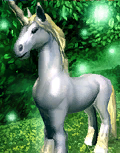
Unicorn
Level: 4
Hiring Cost: 750
Leadership: 130
Attack/Defense: 23 / 20
Initiative/Speed: 4 / 5
Health: 120
Damage (Base): 10-17 Physical
Damage (Horn of Light bonus): +3-6 Magical
Resistances: 25% Magic
Talents: None
Abilities: Magic Resistance (+25% Magic resistance), Horn of Light (Adds Magical damage against Undead and Demons), Defender of Beauty (Sprites, Lake Fairies, and Dryads gain +2 Morale)
The Unicorn's damage is listed in-game as being both Physical and Magical, which is... misleading. In actuality, they do pure Physical damage, except that Horn of Light's bonus damage is Magical; +30% is also a not-quite-correct simplification, as 3-6 Magic damage against Undead and Demons is not precisely a 30% increase over 10-17 -it's roughly a 35% increase to the maximum damage, and so on average is slightly over a 30% increase
Unicorns as a player unit are odd. Anga's Ruby is the most obvious motive to decide to run an army heavy on female Elves, but it also provides +3 Morale to female units. Given that's as high as Morale goes, Defender of Beauty won't even be doing anything if you you all-in on female units! If you happen to be running one or more female units anyway and are considering Unicorns or Black Unicorns (And aren't wearing Anga's Ruby), then Unicorns are slightly favored over Black Unicorns, I guess. Outside of that, Unicorns are a fast, reasonably bulky, reasonably hard-hitting unit that has fairly consistent performance. (Getting bonus Magic damage against Undead means they partially bypass the most significant natural Physical resistance of the game: Ghosts and Cursed Ghosts) Their primary flaw is that they're basically just a generic melee unit, but they're definitely one of the better options if you have motive to run a generic melee unit. It certainly doesn't hurt that they conveniently become available to the player at the point where the game expects the player to fight a lot of Undead and Demons. The fact that they can be targeted by Resurrection -unlike a number of other upper-end melee units- is another point in their favor, and helps make up for their lack of anything like No Retaliation.
As enemies, Unicorns are like Lake Fairies and Sprites, but slower to degrade in damage and easier to stall/delay. (Because they can be Trapped, or chokepoints blocked off by summoned cannon fodder, etc) Depending on your army composition and playstyle with Spells and Rage, they can be utterly infuriating or basically unmemorable.
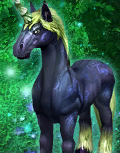
Black Unicorn
Level: 4
Hiring Cost: 950
Leadership: 150
Attack/Defense: 25 / 24
Initiative/Speed: 5 / 4
Health: 140
Damage (Base): 12-21 Physical
Damage (Horn of Light bonus): +4-7 Magical
Resistances: 25% Magic
Talents: None
Abilities: Magic Resistance (25% Magic resist), Horn of Light (Adds Magical damage against Undead and Demons), Tolerance (No Morale penalty from allied Undead)
Black Unicorns are overall slightly better Unicorns, except they have worse Speed, slightly higher Leadership requirements, and are specifically worse if for some reason you're running a mono-Elf army that includes the units that benefit from Defender of Beauty. (While actually having them benefit from Defender of Beauty, obviously) Tolerance obviously makes them the go-to choice if you're wanting to mix in Undead and don't yet have Tolerance-the-Skill, as well.
That said, their overall application as both ally and enemy is not actually that significantly different from Unicorns. In many situations, 4 Speed will amount to the same result as 5 Speed, and none of their other combat qualities serves to substantially separate them from Unicorns. Treat them as you would Unicorns, other than avoiding falling into the trap of thinking they have the exact same Speed and getting screwed over when you thought you had things perfectly lined up.
All this similarity includes that the in-game presentation is misleading, suggesting they do mixed Physical/Magical damage when this is only true against Demons and Undead. This extends to the claimed +30% damage boost being close but not quite correct -they gain 4-7 Magic damage, which is actually exactly 33% more damage being added.

Dryad
Level: 2
Hiring Cost: 50
Leadership: 20
Attack/Defense: 4 / 12
Initiative/Speed: 4 / 3
Health: 25
Damage: 1-4 Magical
Resistances: Generic.
Talents: Summon Thorns (Reload: 2. Summons into an adjacent tile either Thorn Warriors or Thorn Hunters, with a total of Leadership of 8-10 per summoning Dryad), Elven Song (Charge: 1. Allied Elves gain +3 Initiative for 5 turns), Lullaby (Reload: 3. All enemy creatures below Level 4 that aren't immune to mental effects fall asleep for 2 turns)
Abilities: Soaring, No retaliation, Beauty (30% chance to dodge attacks from male humanoids), Charm (Melee attacks have a 20% chance of charming enemy male humanoids for 2 turns), Tree Fairy (+1 Morale for Plants)
Charm is additionally bounded by Leadership; a Dryad stack can't take control of an enemy stack whose Leadership is higher than the Dryad stack's. It's pretty easy to just not see it trigger as a result, even if you use Dryads pretty heavily.
Dryads are ultimately the biggest reason I tend to struggle to justify using Sprites or Lake Fairies. If I want a soaring melee girl Elf who has No Retaliation and does Magic damage in melee and readily costs me Gold when hit, Dryads trade away some Speed in exchange for unlimited cannon fodder summoning (Making it easier to control enemies to maximize the Dryad's own damage output and minimize the odds of taking damage), the ability to just flatly shut down entire armies for two turns, and the potential to just randomly take zero damage when something does get into melee with them (Admittedly assuming the thing in question is a male humanoid), which just seems like a really amazing deal. This isn't even counting that Dryads passively improve Plants (Not their own summoned Thorns, unfortunately), nor am I counting Elven Song or Charm as pros for this comparison. If you've got Anga's Ruby, the comparison becomes particularly absurd; 3 Speed vs 5 Speed on Lake Fairies genuinely lets Lake Fairies eg kite enemies Dryads just plain cannot without convenient terrain formations. Anga's Ruby turns that into 6 Speed vs 8 Speed, and while 8 Speed is amusing it's usually not really any more useful than 6 Speed.
As enemies, Dryads are hampered primarily by the AI not understanding how to use them. They can be obnoxious if your army is made entirely of male humanoids and the RNG just hates you, but they tend to plant Thorns when they should be attacking, open the battle with Elven Song instead of doing anything to hurt you in the here and now, using Lullaby when they should be summoning Thorns... and in general summoners tend to be more helpful in the player's hands and detrimental in the AI's hands. You summoning Thorns stalls a melee attacker for at least a turn while they kill the stack, and even in Hero fights can distract the enemy Hero from zapping something that costs you Gold when it takes casualties. The enemy summoning Thorns can become an opening where you drop a Kamikaze on the newly-summoned Thorns, instantly kill them with a stack of your own (Or, if you're a Mage, a follow-up Fireball or Fire Rain), and watch the fireworks as the Thorns detonate for massive damage to the enemies clustered nearby. (The summoning Dryads, if nothing else) Or the AI summoning blocks off a teammate you were actually worried about, delaying it more than a turn because it's not going to crush this summon like it would if you dropped a tiny summoned stack in its way.
One thing worth pointing out is that Dryads are one of a handful of units in The Legend to have more HP than Leadership. This makes them surprisingly durable even when you aren't running into Beauty causing Misses, and then they have No Retaliation and multiple supporting abilities, allowing them to contribute quite a lot without risking taking hits. This is part of why they make for such good player units, and also something to keep in mind when estimating whether your army can take on a given Elven battlegroup or not: if the group is rated as larger than you, and it's mostly Dryads, you may find yourself struggling even though other Elven battlegroups of the same rating aren't so much of a problem.
Overall, I really like Dryads as a unit, even with the moderate amount of jank to them.
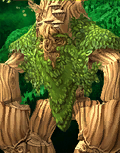
Treant
Level: 4
Hiring Cost: 800
Leadership: 260
Attack/Defense: 30 / 36
Initiative/Speed: 2 / 2
Health: 200
Damage: 25-30 Physical
Resistances: 10% Physical, 50% Poison , -100% Fire
Talents: Running (Charge: 1. +2 Action Points), Wasp Swarm (Reload: 2. Ranged attack that does 12-15 Physical damage and 12-15 Poison damage per Treant, with an effective range of 4. This includes that it can't be activated if an enemy is adjacent)
Abilities: Plant (-100% resistance to Fire, +50% resistance to Poison, immunity to mental effects, assorted secondary implications)
Treants are the Elven version of a generic 2-Speed Running melee unit. Where Dwarves-the-unit are doing nothing useful until they hit the enemy's lines, Treants are harassing the enemy on the way in with attacks the enemy can't really do anything about, which are in fact only very slightly worse on average than their basic melee attack is. If it weren't for Wasp Swarm's limited effective range, you could honestly basically use Treants as a serviceable ranged attacker that doesn't lose most of its utility when an enemy gets into melee with it. As-is, they're useful to charge enemy lines while making attacks of opportunity and can even to an extent kite slow-moving enemy melee. (Or just plain kite if you bother to give them some kind of Speed boosting, such as Haste) Yes, you can kite people with a tree. The Legend is awesome like that.
Their primary flaw as a melee unit in player hands is that being a Plant bars them from eg Resurrection. This is particularly relevant/frustrating because the game is designed so that it's more-or-less guaranteed that you've gotten access to Resurrection by the time the game is willing to let you field Treants. In most other respects, being a Plant is actually very useful, making them immune to various hostile effects, giving them high Poison resistance, etc, with the Fire weakness only erratically relevant (There are very few units that can do Fire damage. It's primarily a Spell-relevant damage type) and throwing in benefits like Dryads bolstering their effectiveness. They're further cramped by the fact that the late game is the point in the game where it becomes increasingly normal for the player to be taking on battlegroups whose total Leadership is far higher than their own. Being able to tank hits and dish out good damage is just not so useful if you're being attacked by a stack that's four times your Leadership. You really need 'autoscaling' effects of some kind to stay relevant.
As enemies, Treants are unusually class-dependent. For the Mage, they tend to be easy mode; time to drop Fireballs/Fire Rains to instantly wipe out a sizable fraction of the enemy army! For the Warrior and Paladin, they're basically generic 2-Speed Running melee that takes even longer to reach your front lines but harasses you with damage you can't block outside of actually locking off their Talent access or the like, making them more annoying than eg Zombies. Their nature as a Plant has fairly low relevance on the army end of things when they're hostile; few Fire damage units are particularly useful for the player, particularly at actually dealing out damage, and the biggest protection being a Plant provides -immunity to mental effects- is very much old hat, what with every random Undead unit having it and a variety of other units -such as Cyclops- getting that protection as well. Unless you've, like, been relying on Heal-nuking Undead cases, you've probably developed a solid battle plan that works more or less the same with Treants, other than them flinging ranged damage at you.
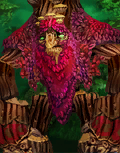
Ancient Treant
Level: 5
Hiring Cost: 3600
Leadership: 1200
Attack/Defense: 40 / 50
Initiative/Speed: 1 / 1
Health: 1000
Damage: 100-140 Physical
Resistances: 10% Physical, 50% Poison, -100% Fire
Talents: Wasp Swarm (Charge: 1. Ranged attack on a single enemy that does 50-90 Physical damage and 50-90 Poison damage, each per Ancient Treant, with an effective range of 4. This includes that it can't be activated if an enemy is adjacent), Summon Wasps (Reload: 1. Recharges Wasp Swarm)
Abilities: Plant (-100% resistance to Fire, +50% resistance to Poison, immunity to mental effects, assorted secondary implications)
Unlike a lot of the 'bigger, meaner version of some other unit' units in the game, the Ancient Treant really isn't the same thing as a Treant. Its ranged attack requires active effort to reload it, and Ancient Treants only get 1 Action Point on their own, meaning that if you don't support them with Haste or something of the sort, they're choosing between moving around vs keeping up the ranged damage. As such, without speed support of some kind they're basically an immobile ranged unit that happens to be shockingly hard to kill and perfectly able to defend itself in melee. Even there they differ from Treants, as an Ancient Treant's Wasp Swarm is better at dishing out damage than their melee attack rather than very slightly worse, the only caveat being Ancient Treants are worse at arranging to get into effective range.
That said, a lot of what I said about Treants still applies. Mages tend to be happy to see them in battlegroups due to the Fire weakness, Ancient Treants show up at a point in the game that highlights a number of their problems (Though Ancient Treants are much more appreciative of the fact that you probably have basically every Spell that could possibly benefit them), etc.
One point worth noting regarding hostile Ancient Treants is that the AI will usually elect to move next to an enemy if it can, instead of firing off a Wasp Swarm or reloading Wasp Swarm. This can be used to basically ignore an Ancient Treant for a few turns by simple virtue of constantly keeping just barely out of its reach while it fruitlessly pursues you turn after turn.
Ancient Treants are also not as hard to kill as one might hope, given their overall role, unfortunately. This is, again, exacerbated by how late in the game they are -stack sizes are high enough by that point that basically anything is going to suffer a casualty if it's hit by a non-resisted attack- but they really are just not as impressive as their statline might make you think.
Thankfully, later games bolster them quite significantly.

Elf
Level: 3
Hiring Cost: 270
Leadership: 80
Attack/Defense: 21 / 15
Initiative/Speed: 5 / 2
Health: 50
Damage: 4-5 Physical
Resistances: Generic
Talents: Double Shot (Reload: 2. Ranged attack that does 8-10 Physical damage to a single target)
Abilities: Archer, Sniper (Unlimited range), No Melee Penalty
While Elves have No Melee Penalty, they can't use Double Shot if a unit is adjacent to them. As such, they still don't like having units in their face, even aside the risk of being retaliated against.
Also, am I the only one that sees Link of Ocarina of Time when looking at their face? It's more pronounced with Hunters, but even with Elves that's where my mind goes, and that's not typical of elves I see in other media.
Anyway, Elves are basically your generic apex archer unit. They're... once again, hampered by how late in the game they show up. For example, you've probably got Dragon Arrows, and in fact probably got it ages ago, which includes as one of its (absurd) benefits unlimited effective range. If you're really wanting a powerful Sniper-esque archer unit, good ol' Bowmen backed by Dragon Arrows will actually tend to fill that exact role better, while also throwing in access to Ice Arrow and, if you've taken Training 2, Flaming Arrow, offering utility effects Elves just plain cannot match. Or maybe you're running Skeleton Archers, in which case they've got Poison Arrow (Letting them punch holes in certain Physically resistant units, even without needing Dragon Arrows) and Black Arrow (Again, punch holes in Physically resistant units, while throwing in purging a positive effect from enemies where relevant) in addition to getting to supplant Elves via Dragon Arrow. Bowmen are less picky about their allies than Elves, and the problems with Skeleton Archer racial compatibility may well be incidentally wiped away (If you went straight for Inquisition, you got Tolerance 1 by definition), leaving basically the only advantages Elves have being 'No Melee Penalty' (But you still don't want units in melee with them...) and 'doesn't need Dragon Arrows to snipe', which is a pretty minor caveat given how utterly ridiculous Dragon Arrows is.
The fact that Hunters exist and overall tend to perform better doesn't help either.
As enemies, Elves are rather more meaningful. Pinning them with a melee unit still ends up hurting quite a bit, ignoring them to focus on nearby melee enemies hurts because they're Snipers, and they're high enough Level you might not have some of the easy answers actually able to affect them. (eg Blind)

Hunter
Level: 4
Hiring Cost: 700
Leadership: 150
Attack/Defense: 27 / 18
Initiative/Speed: 6 / 2
Health: 90
Damage (Standard): 8-10 Physical
Damage (Anti-beast ranged): 12-15 Physical
Resistances: Generic
Talents: None
Abilities: Archer, Sniper (Unlimited range), No Melee Penalty, Hunter (Calls the anti-beast attack when firing on a relevant target at range)
It's an Elf, only the Double Shot damage is its base damage... but their Leadership is nearly twice as high... ah, but that basically means an equivalent-size Elf stack hits twice as hard once every three turns and slightly worse on the other turns, and Hunters are also less bothered by units getting in their face.
Still, Hunters are fairly boring units, and almost everything I said about Elves applies in terms of eg 'shows up so late in the game that the game design undermines their utility'. Even their Hunter Ability is hurt by this, as the animals that qualify show up much more heavily before you're liable to have Hunter access!
Also note that since their anti-beast bonus damage is implemented as a separate attack, they don't get +50% damage against beasts when using Dragon Arrows. So that's awkward.

Druid
Level: 3
Hiring Cost: 240
Leadership: 110
Attack/Defense: 16 / 22
Initiative/Speed: 2 / 2
Health: 48
Damage (Ranged): 4-8 Magic
Damage (Melee): 2-4 Physical
Resistances: 25% Magic
Talents: Summon Bear (Charge: 1. Summons a stack of Bears or Ancient Bears, whose stack size is determined by having their Health be 15-20 per Druid in the casting stack), Training (Charge: 1. Steals a target animal stack whose Level is below 4 and whose Leadership total is 88 or less per Druid in the casting stack. This control lasts for 2 turns)
Abilities: Power of Forest (Range: 6. Ranged attack splashes to adjacent enemies with no friendly fire. The splash damage is only 50% of base), Magic Resistance (+25% Magic resistance), Harmony Aura (+1 to Morale for allied Elves)
Druids are a surprisingly underwhelming unit.
One of their problems is they're strangely slow to act. 2/2 on Initiative and Speed is worse than the vast majority of units in the game, and a sizable portion of the units they do beat in turn order are, themselves, fairly dubious units. (eg Zombies, Peasants) This is particularly problematic on a ranged unit (Because whichever ranged units go first can immediately hurt the enemy ranged units to reduce the damage they take in turn, where a melee unit that's low on turn order isn't any worse off in the first turn or two than one that's high in turn order, and indeed a melee unit with awful Initiative but insane Speed will actually start putting work in before one that's the reverse), and especially in the context of their ranged splash damage attack. (As enemy units will largely have broken up their formation before the Druid gets a chance to hit them with it)
Speaking of the ranged splash attack, their damage is fairly poor for their Leadership and in practice you'll rarely hit more than two, sometimes three units at a time, both in general and due to the aforementioned turn order problem. The late game (Where you actually have access to Druids) is also fairly heavily populated by units with at least moderate Magic resistance (eg Dragons, Unicorns), making their lackluster damage go even less far.
The ability to summon (Ancient) Bears works out as somewhere between 25%-33% of a Bear per Druid, when Bears are slightly over half the Leadership per head compared to Druids. So in practice your Druids are summoning a stack of Bears whose Leadership is in the vicinity of 15% of the Druid stack's Leadership. That's a really low rate, overall -if you paid attention earlier, Dryads summon 40-50% of their Leadership in Thorns, and those Thorns can then summon more Thorns, not to mention the Dryad's summoning Talent is reloading. Other summoners we'll see later are pretty much universally better than the Druid at summoning, and while some of them have caveats attached (eg Necromancers need a corpse to work with) others do not (eg Demons, the aforementioned Dryads) and even the ones with caveats are usually pretty decent units in their own right, with the summoning being basically a bonus.
While Bears that are summoned maximizes the positives of Bears while minimizing their problems, at 15% of your Leadership they're depressingly likely to be instantly killed, or even 'merely' slashed to nearly nothing. Arguably your Druids are usually going to be better off using their (depressingly weak) ranged attack instead of bothering to summon Bears, since the Bears are unlikely to do any damage.
They can steal enemy units wholesale, but only if those units are both considered to be 'animals' (This is a surprisingly limited list, for instance excluding all the spiders and Devilfish) and are also somewhere below the Druid stack's own size. As with several other Elven units, the fact that they show up late in the game hampers the issue -anything you can steal likely involved you ripping half the stack apart first, and that's assuming your Druids didn't suffer any casualties while you were arranging this to happen at all. (Not even touching on how animals are fairly rare in the late game!) One of the few exceptions is, ironically, that of being basically guaranteed to be able to steal newly-summoned Bears enemy Druids made... which is amusing, but in practice the enemy Druids will probably just steal them back. (This is totally a thing that can happen!)
Harmony Aura seems like a tempting reason to take them along, just for the passive boost to other Elves, but Morale's effect isn't that huge and it has diminishing returns in practice. Having 4 other units have 10% more Attack is neat, until you realize that if you're doing that the Druids are actually only increasing the Attack by about 9% (Because that's roughly what going from 110% to 120% works out to) and more importantly realize that Druids are sufficiently poor as units that you'd probably have your army's performance overall higher if you replaced the Druids with some other Elf, or possibly even a non-Elf!
Even as enemies, Druids are surprisingly lackluster. Their already poor damage gets made worse by the AI tending to have them just stand wherever they are, like some kind of turret, instead of trying to get into effective range. The Bear stacks they summon are so small that even the fact that the player will increasingly face oversized enemy stacks won't lead to the Bear stacks being more than a momentary nuisance. I skipped over it when talking about using them because for the player it's usually not too much of a problem for a ranged unit to have this issue, but Druids are also quite poor at the Leadership-to-HP ratio, their HP being less than 50% of their Leadership. Most units whose HP is less than 50% of their Leadership are somewhere over 1000 Leadership, not a little over 100, and make up for it with powerful qualities (eg Archdemons having Teleportation and purging all negative effects on themselves every turn for free) and often throw in unannounced minor-to-modest resistances. (eg Black Dragons have 15% Physical resistance, in spite of lacking an Ability to explicitly justify this degree of resistance) A Red Dragon's poor HP is misleading, because only Poison does full damage to them. A Druid's HP is exactly as bad as it looks, aside from their not-very-high resistance to Magic.
This is compounded by their poor placement in the turn order: Druid stacks are quite vulnerable to suffering huge casualties before they ever get a chance to do anything, which in turn worsens the other problems. (ie it's bad enough summoning around 15% Leadership of Bears when you're actually at full Leadership, but if your Druids are nuked to 50% by Evil Gremlins, that already-tiny Bear stack is shrunk still further)
And it's quite clear the developers agree with me, because Armored Princess drastically improves them!
But that's for later.
----------------------------------------------
Narratively, Elves are fairly interesting to me. The game likes to hint that they're not intended to be as awesome as they think of themselves as being, and even more interesting is their relationship to eg the Undead. The game doesn't exactly spell it out, but part of the reason there's some Tolerant units on the Elves is because they invented Necromancy, and indeed there's a couple of 'Books of Death' in their lands that let people go hang out in the deathlands, also made by Elves. The game doesn't make a big drama point of it being a stain on Elven pride or whatever, but it's a historical fact, and it's an unusual choice for a fantasy story of this sort. It's even thematically appropriate to connect your 'in tune with life/nature' species with themes of death.
One of the more subtle, interesting examples of subverting tropes about Elven awesomeness is that the Elves speak of themselves as being the eldest race (Which is, for reasons I've never really understood, a fairly common trope for Elves in fiction. Okay, sure, individuals are long-lived, but why does that have to correlate to the species' history stretching back to the dawn of time?), but it's made quite explicit by the plot that this is simply untrue; Orcs were made first. Elves are the first race made by the gods of the setting, but the titans were at these shenanigans first and made the Orcs earlier.
Gameplay-wise, Elves are... well, they're more interesting to me for the 'concept' end of things than the actual execution. A few too many of their units are lackluster or placed in the wrong portion of the game to be valuable for me to praise the execution. But I do like some of the things the game is trying to do. It's an interesting twist on an old staple to make Elves focused on ranged attacks, but then make almost all their ranged-capable units skilled at defending themselves in melee. (Not only that Elves-the-unit and Hunters have No Melee Penalty, but also that Treants and Ancient Treants are melee tanks that fight relatively competently at range via Talents, sustainably) Not only that, but in a lot of ways the bigger focus seems to be on being able to dish out damage without having to take it, with range advantage merely being an option; Unicorns, Black Unicorns, and Werewolf Elves in both forms are the only Elven units that have neither a ranged attack/reusable ranged Talent nor have No Retaliation.
Furthermore, while the execution could use some work... well, the very next game works on it!
Awesome.
----------------------------------------------
Next time, we cover the Orcs.
See you then.