This might seem odd, but we're going to start with Frostpunk's Law system, rather than eg 'how does harvesting resources work?' or other more basic topics.
So first: the Law framework itself.
In broad strokes, Laws are like a traditional Video Game Tech Tree; you have foundational Laws you can pursue immediately, more 'advanced' Laws locked behind issuing specific other Laws, and issuing Laws provides new tools or alters the behavior of existing tools, with the whole progression heavily gated by time advancement.
The detail-work of the implementation is pretty odd, though.
First of all, where most tech tree systems -including Frostpunk's Workshop tech tree!- have the player select a desired result and then wait some period of time to complete the research, Laws operate 'backwards': you activate a Law, it applies immediately, but then Law selection goes on cooldown for a number of hours based on what Law was just activated.
Second, Laws are completely free to pass and are unconstrained by external factors. Laws do not cost resources to pass, the Law cooldown cannot be modified by conditions on the ground, no Law is dependent on an existing research or structure being completed to make the Law possible to pass. (With... one special exception) Only the cooldown, Law tree requirements, and scenario-specific question of when the plot gives access to your secondary Law tree are relevant.
Third is the factor my feelings are most mixed on: where video game tech trees generally endeavor to have researches be 100% beneficial, the Law system erratically attempts to make Law decisions complicated by them having negative consequences, and/or preventing the passing of a different Law, and/or having the benefit of the Law be itself a trade-off to benefit from. In theory, I find that appropriate to a system of 'lawmaking', but in practice I feel Frostpunk's design would be much better if it had stuck to Laws being clearly beneficial and hinged the design around the aspect of prioritization: which Laws to go for first, no questions about whether a Law should ever be taken.
'Adaptation' Laws are the starter Laws you always have access to unless you're playing The Last Autumn. (Which has a different Starter Law tree that will be its own page) I'll be covering these in a somewhat-arbitrary conceptual order, mostly to let me introduce and explain a few other Frostpunk systems I don't really feel deserve a whole page to themselves.

Fighting Arena
Requires: Nothing.
Law Cooldown: 36 hours.
Enables the construction of Fighting Arenas. Initiates a quest to build one Fighting Arena within 2 days. Completing this quest slightly raises Hope.
Note that the quest is mentioned by the game, but in a semi-hidden way, and it doesn't actually mention the deadline until you actually pass the Law. Laws that unlock buildings have such a quest quite consistently, and while they thankfully do tell you ahead of time how many copies of the building will be demanded, the timer is never revealed ahead of time. Completing these quests usually also bumps up Hope a small amount, which is never mentioned by the game until you complete a given quest and get the Hope boost.
Also note that while you do have to complete the building(s) to complete the quest, you are generally free to demolish the structure(s) you built immediately afterward if you like. This usually isn't important, but it's worth keeping in mind as an option if you don't actually want the building in question: maybe you pass Fighting Arena to get the Hope boost for completing the quest, but don't actually want space and Wood ongoingly tied up in Fighting Arenas, that kind of thing.
As for what the Fighting Arena is about...

Fighting Arena
Costs 15 Wood.
Size 3x2
An unmanned structure which slightly reduces Discontent for each citizen whose currently-assigned housing exists in its radius. No meaningful interaction with temperature.
... well, I have to explain Discontent.
Discontent is one of two bars lurking at the bottom of the screen at all times, in every scenario, even The Last Autumn. As with many things in Frostpunk, you don't get much of an explanation of what this does and especially how it interacts with other systems, and enough stuff occurs without explanation on the regular that it's easy to think Discontent was causative of any number of events or whatever, but... it actually does essentially nothing.
More precisely, unless Discontent reaches 100%, it will literally never have any effect by default. Individual scenarios can and sometimes do have events affected by Discontent, such as not letting you select a specific event resolution if Discontent is too high when the event fires, but this isn't used much by the game. As for what happens when Discontent reaches 100%? Well, an event will fire that informs you everyone is very mad at you and you've been given an ultimatum of 2 days to make things less terrible, Or Else. Specifically, you'll have 2 days to reduce Discontent below 75%; if you fail, you... instantly Game Over, the community exiling you to die in the icy wilderness, which is not at all hinted at by anything prior to it actually happening. If, however, Discontent is ever below 75% for even a moment, the test is instantly over, all is forgiven, and Hope rises a small amount. This is true no matter how many times Discontent reaches 100%: at no point will your citizens decide you've pushed them over the edge too many times. Indeed, going over 100% can't re-trigger the event for something like a full day after you've successfully resolved it.
Also, if you have Guard Stations or Faith Keepers active, you can choose to 'send them in', in which case you skip the above test and just ignore the high Discontent entirely. So Purpose Laws can take this already-trivial mechanic and make it even more trivial. Yay?
In spite of what you might expect from the percentage framing and from how 100% Discontent results in the entire bar being filled up with red, Discontent can in fact continue to rise past 100%, and you can see exactly how far over 100% you are by hovering over the Discontent meter. So don't go 'eh, might as well spam Emergency Shifts everywhere' or the like because you're at 90% Discontent. (Not before you have Guard Stations/Faith Keepers, I mean)
Discontent itself broadly can be divided into two basic categories: 'eventful' Discontent, where a bad thing happens and injects some Discontent into the pool, but the Discontent will vanish after a few days, and 'contingent' Discontent, which is tied to a specific problem and will reduce basically instantly once the problem itself is reduced, all the way down to being completely eliminated if the problem is completely gone. Note that 'eventful' Discontent is caused by all events (As in, Plot Things) that increase Discontent, but also by certain activated abilities, certain unpopular Laws, and of course by citizens dying.
So all that said, where does the Fighting Arena sit in this context?
It's crappy, that's where.
The core problem is that Discontent going up is not actually a clear negative, and so reducing Discontent is not a clear positive. Discontent only becomes a problem if it reaches 100%, and even reaching 100% only requires temporarily backing off on Discontent-increasers like Emergency Shift activations. (Okay, and staying on top of food, illness, etc, but you should endeavor to do that regardless) In fact, since reaching 100% Discontent will produce a Hope increase upon getting back below 75% Discontent, it can be outright desirable to have Discontent high! The Fighting Arena's core function as a passive ward against Discontent is thus very dubious; Discontent would have to work very differently for the Fighting Arena to be valuable on a reliable basis.
Indeed, I opened Adaptation Laws with the Fighting Arena because it's the 'root' to an entire branch of Discontent-management Laws that all suck first and foremost because Discontent-reducing tools are fundamentally low-value, independent of their internal qualities. The Fighting Arena is actually pretty inoffensive: it costs a low amount of Wood, it doesn't need to occupy a heat zone, it doesn't require citizens be assigned to it and so doesn't compete with other jobs, it consumes the minimum amount of space for a structure, and it has no esoteric disadvantages...
... which actually touches on a different bit of jank to the Fighting Arena; that its mechanics are wildly counterintuitive to its narrative concept! Conceptually, the Fighting Arena improves peoples' moods by providing an acceptable violent outlet for friction between people, which also acts as bloodsport entertainment for onlookers. Somehow, these fistfights never result in an injury severe enough to require medical care, and neither the fighters nor the audience are at any risk of getting sick from the cold or suffering frostbite even if their Thunderdome is nowhere near a Heat Zone and it's -70 degrees Celsius outside. This is especially wild since the Fighting Arena is only 'active' after the workday ends, meaning when the sun is down and so realistically things would be even colder!
Anyway, returning to gameplay; while the Fighting Arena is largely low-value, I should emphasize it can be worth passing the Law and getting some Fighting Arenas built. Among other points, the Discontent reduction can go into 'negatives': the game won't do anything to communicate this is happening, but if eg you're at 0% Discontent, then get Fighting Arena coverage, then trigger a Discontent increase, you may still be at 0% afterward. An even more straightforward test is using two Emergency Shifts close together: you can see stuff like the first use bringing Discontent to around 5% and the second use to around 25%, even though Emergency Shift's Discontent 'price' is only affected by difficulty setting. Fighting Arena is also the most accessible 'quick fix' for Discontent, if eg you accidentally hit 100% Discontent shortly before something you didn't anticipate spikes Discontent still further and so actually do need Discontent reduction to avoid a game over.
I'm not 100% sure exactly how its reduction works, annoyingly. I think it has a fixed maximum value and delivers that value in proportion to how many citizens are currently covered, as it clearly doesn't simply scale to population size, but it's possible it's a different model I'm misinterpreting. The game itself certainly doesn't explain the details, and as far as I can tell, no internet resource exists that cares about this topic: this is one reason I decided to make this series, as Frostpunk has a fair amount of things like this, where the game doesn't explain itself and a person looking around online will find a smattering of detailed explanations of some mechanics sprinkled across a disconnected series of sites, alongside zero explanations anywhere for a great many other mechanics.
Also, I should point out that the people assigned to the Fighting Arena do in fact walk to it and stay inside it, which can prevent them from eg participating in building construction. Oddly, fights will claim to have audience members, but these people ostensibly watching a fight can be on the other side of the city, busily eating or building a building or whatever even as a Fighting Arena insists they're watching the fight. So it doesn't tie up as much labor as the game info would suggest, but each Fighting Arena you build can potentially tie up two citizens at an inopportune moment, especialy since it selects citizens very randomly.
I should also cover while I'm here a design rule I have mixed feelings about: most Laws that unlock a building will give a Hope bonus for meeting the target building count in a timely manner. I have mixed feelings about this because it gives Laws that are tied to buildings a weird, small advantage over other types of Laws; Hope is largely not a serious enough mechanic to care that much in practice, but it's clear it was intended to be a pretty important mechanic, and if it were successfully built to be such then this would've given a notable weird incentive toward preferring building-unlocking Laws that I don't feel the game was considering at all. And in A New Home and The Fall of Winterhome, this funkiness is actually moderately relevant.
Anyway, next Law.
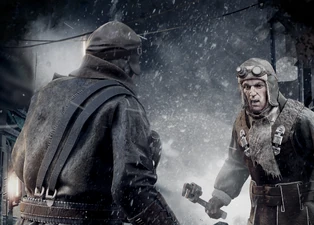
Dueling Law
Requires: Fighting Arena.
Law Cooldown: 45 hours.
Each day, there is a chance for a 'duel' to be announced, selecting two random citizens. When this occurs, Discontent slightly lowers. There is a low chance that one of the participants will die. Passing this Law also immediately lowers Discontent.
I am very much not a fan of Dueling.
Game design-wise, Dueling is straightforwardly baffling: an erratic Discontent reduction that has a chance of killing people, thus generating more Discontent while also reducing labor availability in an unpredictable, uncontrolled way, is just... when is a player supposed to want this? It's a self-sabotaging Law that can be pure disadvantage if the RNG is hostile!
Now, that statement comes with the caveat that I'm just taking the game's word for it that duels can be lethal. I've twice taken Dueling very early in a run for testing purposes, and in both cases no deaths ever occurred. Possibly Dueling is lying about the possibility of death. More likely is that it's just very low odds -or that it's moderately low odds but I got lucky.
Whatever the exact scenario is, I'm critical of Dueling regardless. If death being possible is a lie, then Dueling is a freebie Law 'balanced' by trying to scare the player away with a stupid lie. If Dueling can kill, but its odds are so low that a run expects no deaths to occur, then it's still a freebie Law but you can get unlucky and actually lose somebody, yay? If it's actually got numbers that expect to produce 1-2 (or more) deaths across a run and I've just been strangely lucky, then we're back to my original criticism. This design just can't be good.
Also janky is that Dueling is unexpectedly able to eat noticeably into labor: when a duel occurs, two citizens do in fact spend 2~ hours beating each other up, refusing to do other tasks, and these fights spontaneously draw crowds of 5+ people who also refuse to work until the fight is done. Oddly, everybody involved will be labeled as 'fighting', even the audience members. This de-facto gives Dueling a secret disadvantage, one that's reliably consequential in a way Discontent rarely is. And yes, we've got two Laws for lowering Discontent by watching fights, but one has its audience apparently watching via steampunk smartphone while they work while the other demands in-person watching, and inexplicably the latter one is the later-placed Law you'd expect to be the better Law.
In terms of narrative/gameplay intersection, Dueling is also confusing. Why does the Generator Tyrant even have the option of telling their citizens it's legal for them to try to kill each other? Why don't these duels ever result in infirmary time? Why are our non-nobility so eager to take up this tradition that was mostly something nobility did over matters of honor? Shouldn't the Fighting Arena intrinsically provide this entire benefit anyway, since it gives a legal time and place for violently settling disputes? Seriously, what is with this Law???
At least nothing is gated behind it, so you can in fact completely ignore it in every run...
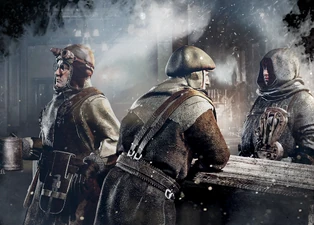
Public House
Requires: Fighting Arena.
Law Cooldown: 18 hours.
Enables construction of the Public House, and initiates a quest that denands the Public House is functioning within 2 days. Failing this quest reduces Hope, while succeeding at it increases Hope.
What is the Public House, you ask?...

Public House
Costs 20 Wood and 10 Steel.
Size 5x3
Can be manned by up to 5 Workers or Engineers. (Children and Automatons can never work here) Modestly lowers Discontent if manned by at least one citizen. If temperature is below Chilly (ie Heat is -3 or worse), cannot function. +2 Heat. Only one copy can exist in the city at any given moment.
... it's... also sucky, because once again, reducing Discontent is low-value. And unlike Fighting Arenas, the Public House costs precious Steel, must be manned to give its benefits, and must be kept adequately heated to function. Its only serious upside is that you can place it pretty freely, as it doesn't actually need to be near housing or the like to give its benefits. It also has the downside that once the Law is passed, if no Public House is present this will impose a small Discontent penalty: nobody minds not having a bar unless you've legalized the bar's existence, apparently.
I should note I've never fully tested whether there's an actual scaled benefit to fully manning it. I'd certainly hope that the number of active bartenders actually affects how much Discontent reduction it provides, but it's entirely possible that 1 bartender is just as effective as 5. Certainly, the benefit for it functioning at all isn't scaled any, and, well, the daily reduction it claims to provide is something I seriously doubt actually exists. So... I'm concerned it isn't scaled at all, its Efficiency is irrelevant, and you should just assign 1 citizen to it.
Narratively, the Public House is... whatever. I question where Frostpunk's citizens are getting their alcohol and I'm skeptical of the effectiveness of 'open a bar' at improving morale in an icy apocalypse, but I also am a person who has never understood the appeal of bars in the first place, so I'm probably not a good judge of that point. And alcohol can legitimately protect against frostbite (Though it makes death by hypothermia more likely, I should point out), when frostbite is a Frostpunk mechanic, so alcohol isn't an insane thing to want in the icepocalypse. I'm just bleh overall on this end of things.
I should also comment that one of Frostpunk's tips is... technically not completely wrong... but suggests to me that the devs' really intended for Frostpunk's citizens to be modeled in more detail than they actually are, as it claims that 'homeless citizens don't benefit from entertainment sources, such as the Fighting Arena and Public House'. This tip is correct that homeless citizens don't interact with the Fighting Arena, but this is only because the Fighting Arena's mechanics concern themselves with homes in its radius: the Public House has no equivalent design, and even if it does have a daily Discontent reduction mechanic, I seriously doubt it's set up in a manner that actually cares whether citizens are housed or not. More importantly, the tip's framing -of citizens 'benefiting from entertainment'- really suggests that the game is tracking each individual citizen's mood, which, uh, it doesn't do that.
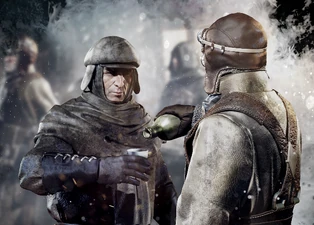
Moonshine
Requires: Public House.
Law Cooldown: 36 hours.
Discontent very slightly lowers each time a citizen eats, and eating Soup doesn't generate as much Discontent.
If you have Soup and Public House grabbed anyway, Moonshine is pretty easy to justify taking. It has no disavantage and no cost; just free Discontent reduction, especially for Soup usage. I would in fact argue that the main reason to pass the Public House Law is to get access to Moonshine.
Moonshine also provides our first example of one of the most frustrating design decisions in Frostpunk: secretly-triggered events that reliably occur after passing a Law but which are so ambiguous in handling you're unlikely to even realize the event is related to that Law. In Moonshine's case, after a random delay you'll get an event describing a man ranting about people being ill, homeless, cold, and scared and criticizing the idea of giving people booze instead of help. You'll then have two options: slightly raise Hope but also increase Discontent a little, or slightly reduce both instead.
This particular event is pretty inoffensive: it's annoying that the game doesn't clearly communicate that Moonshine will reliably trigger this event, but the event itself is very low-impact. Honestly, you should basically always go for the 'increse both' option: raising Hope is much harder to accomplish than lowering Discontent is, and Moonshine's benefits directly help with getting the Discontent down. Unfortunately, there are other Laws that are much worse about this...
... and more importantly, my deeper criticism of this 'Laws secretly cause events' mechanic is that it's a deeply flawed stand-in for genuine complexity. Frostpunk's loading screen tips will forewarn you that Laws can have unexpected consequences (Well, actually it lies and says they always will have unexpected consequences), and from a realistic perspective, yeah, passing laws does tend to have consequences and implications not foreseen by the people passing the laws: the larger and more varied a society gets, the more likely it is that lawmakers will have literally no experience with and conception of parts of society, and so the more likely it is that laws they come up with will impact at least some people in unintended ways, or indeed might affect absolutely everyone in unintended ways if the law's impact is felt on something 'invisible' that's important to basically everyone. (eg a law impacts the behind-the-scenes parts of trash services, or road development and maintenance, or whatever, where people who aren't inside those industries might have no idea that a law around a specific material might impact everyone, because only the insiders are aware of how important the material is to their job)
But Frostpunk doesn't build itself with the kind of complexity that allows for organic implications of this sort. There's nothing equivalent to how, say, in the USA many people use grocery store plastic bags as trash bags (Among other purposes they get used for beyond the initial grocery store trip), and so banning grocery store plastic bags means people need to actually buy trash bags, among other implications. These events are an effort by the game to fake this type of real complexity, where Laws have 'unexpected' consequences not because life is complex and an individual's picture of the world is perpetually incomplete, but because the devs have coded in reliable consequences you just don't get explicitly told about up front. Notably, the game essentially doesn't vary these across scenarios: the Moonshine event I just described is not, say, specific to A New Home and replaced with a different event in The Arks, and a third event in The Refugees, and so on.
Not that I'd like that approach at all, mind, but my point is that once you have identified a Law's event-based knockoff consequences, they are very clockwork. The delay before they fire is randomized, but that's it; they fire every time their conditions are met, generally do so in every scenario (With a small number of exceptions I'll point out as we get to them), and never vary their details at all. This in fact can get dissonant with individual scenarios, sometimes quite badly so: having the Moonshine event fire in most scenarios feels plausible enough (If you aren't playing so well that makes its claims counterfactual, I mean, but I'll come back to that in a second), but in The Arks it comes across a bit oddly to have one of your Stiff Upper Life Vaguely Aristocratic Engineers apparently delivering this speech.
I really would've preferred the game had simply been more organically complex in the first place, but if it was going to do this event stuff, I would rather it at least had been a bit more transparent of the true workings of these systems. It really feels like the devs intended this stuff to work okay mostly by virtue of expecting players to only play a given scenario once, and to not be analytical enough to catch how consistent various of these effects are. Alas.
Anyway, while Moonshine is relatively inoffensive from a game design standpoint, from the perspective of narrative/gameplay stuff, it's... much more confusing.
First of all: all my talk of the Public House being a place to drink alcohol? That's not an assumption I'm making based off the name; your citizens respond to the Public House by talking about how much they miss drinking and are looking forward to alcohol with friends, explicitly confirming it's serving alcohol. So, uh, what's Moonshine legalizing? It can't be alcohol access itself: the Public House already provides that!
Incidentally, this is part of why the Moonshine-triggered event is easy to be unclear on: even if you guess it's tied to a Law, it's just as plausible for the causative Law to be the Public House! And while I'm on that event again, I should point out the event can trigger even if your city is warm, no one is ill, everyone has a home, and Discontent and Hope are doing well. Which is to say the rant can occur even if it's completely wrong; Frostpunk struggles with this a fair amount, where it's shooting for a particular miserable experience for the player's city, but it's extremely plausible for a player to be performing so well that they aren't having that experience at all and plot elements centered on Everything Is Terrible For Everyone just... don't land right.
Anyway, the second confusing thing about Moonshine is its name. 'Moonshine' as a term for alcohol is very specifically for illegal brewing of alcohol. The name is a suggestion the alcohol was made 'in moonlight', meaning in secret, away from prying eyes. 'Legal moonshine' is an oxymoron. If I instead assume the devs were focused on how moonshine is often extremely risky to consume because the illicit brewing process often includes problems like 'a lead container was used, so lead leached into the alcohol, so drinkers go permanently blind', then why is Moonshine such a harmless, safe Law? Shouldn't it cause illness and death, like actual moonshine does worryingly often? Either way, the name doesn't jive with what the devs seem to actually intend the Law to narratively be: alcohol served alongside meals as a default.
Third, it's so weird that More Alcohol Being Passed Out even is a free Law. Why aren't I required to build some alcohol production facility? Why don't I need to spend labor on this? Is there a mysterious spigot on the Generator that dispenses limitless alcohol? Is Frostpunk snow secretly all frozen alcohol, and all you need to do is dump it in a mug and warm it up? This isn't a simple change in procedure, a change in social rules: alcohol has be made for there to be alcohol to pass out!
Fourth, I... don't understand why it makes Soup less hated. I'll just sigh and accept 'alcohol lowers Discontent in general' because much of the world seems to earnestly believe alcohol improves moods or at least reduces active resistance from unhappy populations; that this doesn't align at all with my own experiences and observations nor with the actual biochemical effects of alcohol doesn't change the fact that this is a stock meme all over the world, so holding it against Frostpunk in particular isn't exactly productive. But... why the Soup thing?
Fifth, it's kind of frustrating that Frostpunk doesn't seem to show any recognition of the antimicrobial properties of alcohol. This is a game where citizens getting ill is a major mechanic, yet alcohol isn't an important resource for sterilizing surfaces or the like? We're really just going to have it be Happy Juice and that's it?
Moonshine is such a confusing Law if you try to think about it as anything more than A Video Game Decision Thingy...

House of Pleasure
Requires: Public House.
Law Cooldown: 36 hours.
Raises the Public House's employee limit from 5 to 10. Passing this Law immediately lowers Discontent and Hope by a small amount.
The narrative framing here is that the Public House now has prostitutes in it, but there isn't any clear mechanical support for this: Frostpunk doesn't seem to have the ability for a single building to have employees assigned to separate tasks, so you don't get a prostitutes sub-section of employees at the Public House. You just get more employees.
Ostensibly, House of Pleasure also increases the Discontent reduction the Public House provides per night. As I'm unconvinced that even is a thing the Public House actually does, I have serious doubts that House of Pleasure actually provides any benefit at all.
Even if I assume it does work in spite of my doubts, I'm pretty sure House of Pleasure is a bit of a trap choice regardless. The ostensible payoff is low, Discontent reduction is low-value anyway, lowering Hope is bad, and if the Public House does indeed have any benefits that scale to employee count, then doubling the employee limit is a bad thing. In Frostpunk, a building's maximum payoff is decided by the building, and assigning citizens to the building provides a portion of that maximum payoff in proportion to the percentage of labor capacity: House of Pleasure should thus be halving each employee's contribution to Discontent reduction!
On top of all that, House of Pleasure is another Law that triggers an event: after a random delay, someone will die, and you'll be told a prostitute committed suicide due being habitually abused by a client. This will happen even if you never actually added more employees to the Public House, and in fact can happen even if you tore down your Public House long before passing House of Pleasure and never rebuilt it. It can also happen absurdly quickly, where there hasn't been time for multiple visits to have occurred! This death is unavoidable, picks a random person (They don't have to be a Public House employee, even if you have it manned), and of course automatically lowers Hope further, raises Discontent a fair amount, permanently shrinks your labor pool, and requires the body be buried. That seriously undercuts the value of 'this Law reduces Discontent', and is the biggest reason I consider House of Pleasure a trap choice. It's also our first example of 'Law triggers an event' seriously affecting the balance or design of Laws: if this event wasn't a guarantee after passing House of Pleasure, it would still be very dubious, but easy enough to justify passing if Hope is solved and labor is plentiful, but since it is guaranteed to occur, this is a much worse Law than it first looks.
More narratively, I really dislike this Law. Partly this is a personal taste thing; I don't really care for games pushing in sex stuff in general. If you want to do porn, make porn, and market it as such, don't tack it on to a non-porn game. Certainly not so at the edges like this, where you're not doing big thematic things or the like; House of Pleasure honestly feels like Frostpunk trying to earn its M rating so you'll take it seriously as an Artsy Game For Adults, completely different from Frivolous Games For Children, which is a thing I just find exasperating anytime I'm seeing it.
But even aside that angle, House of Pleasure is frustrating. Frostpunk is bringing in prostitution, and it's treating this as a near-free way to manage the populace's mood, aside the detail that abuse followed by suicide happens. (Exactly once, by the way) There's no venereal diseases in our game where illness and prostitution are both part of gameplay, there's no risk of inconvenient pregnancies in our game where starvation is meant to haunt the player as a real threat and labor management is a constant part of gameplay... it's just a token bit of pointing out that prostitutes are often seriously mistreated, only I can barely even credit it that because I seriously doubt anybody has ever had Frostpunk be the thing that made them realize that's a thing in real life.
It's also frustrating for how it's an example of Frostpunk not properly recognizing the limitations on its Discontent and Hope frameworks, nor properly accounting for its own context in other ways. This is a game where everyone works in an interchangeable manner: man, woman, and potentially child, in a time and place that was very repressive about sex in general but especially about things like homosexuality existing. House of Pleasure would be appropriate if Frostpunk was modeling a historical company mining town where up to 100% of the relevant employees are men and the labor demographics stayed true to that: this is absolutely what happened all over the USA in its 'wild west' days, for example. It's much stranger to have House of Pleasure when around 50% of my hard-working men are actually hard-working women, homosexuality is taboo, and the player's Public House assignments can totally end up 100% male even after passing House of Pleasure.
Notably, House of Pleasure modifies the Public House model, adding a... sigh... giant sexy kicking girl of cardboard with neon lights. (Where did we get neon lights in our icepocalyptic hellscape?) The suicide event uses only gender-neutral wording, but the visual language here is firmly 'heteosexual men paying women for sex'. (By the way: paying... how? I'm supposed to believe this is a fiat currency economy??)
But returning to that 'not properly recognizing the limitations on its Discontent and Hope frameworks' point: the suicide event directly calls attention to one of the biggest limits on Frostpunk's framework; Discontent and Hope are global stats! The game has no ability to represent strongly uneven mood or opinion swings: House of Pleasure makes everybody dislike you less, even the abused prostitute who ultimately commits suicide. Frostpunk needed to either give itself the capacity to apply feelings and opinions to individuals -or at least to groups- or keep its options narrowed to things that are smooth enough to simplify into a universal response to the player's decision, not wander repeatedly into saying there's uneven responses to player decisions within a framework that simply can't do that.
House of Pleasure is probably the Law I most wish had just not made it into the game. Honestly, I'd probably shun it even if its benefits weren't possibly-non-functional simply because it bothers me so much.
Ugh, next Law!
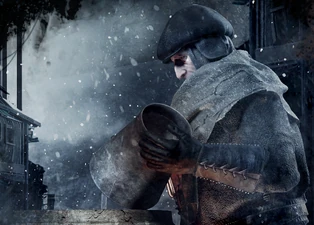
Soup
Requires: Nothing. Mutually exclusive with Food Additives.
Law Cooldown: 18 hours.
Cookhousees can now be set to produce Soup instead of regular Food Rations. Soup converts 2 Raw Food into 5 Rations, instead of the normal 2 into 4 rate, but Discontent will increasingly rise so long as Soup is being consumed. Passing this Law immediately raises Discontent a little, reduces Hope a little, and causes all existing Cookhouses to switch to Soup production.
Our first example of a pair of Laws which are mutually exclusive. Behold its partner:

Food Additives
Requires: Nothing. Mutually exclusive with Soup.
Law Cooldown: 18 hours.
Cookhousees can now be set to produce Sawdust instead of regular Food Rations. Sawdust converts 2 Raw Food into 6 Rations, instead of the normal 2 into 4 rate, but has a chance of inducing illness when consumed. Passing this Law immediately raises Discontent a little, reduces Hope a little, and causes all existing Cookhouses to switch to Sawdust production.
Unfortunately, Soup and Sawdust are a good introduction to how Frostpunk tends to handle these paired Laws: they both do broadly the same thing, with slightly different details, and the result tends to be that one choice largely beats out the other in a pretty unambiguous manner. In this case, Soup is the superior choice.
The frustrating thing is Sawdust's design is fine on its own merits. It induces sickness 3.5% of the time to 6.5% of the time, depending on the 'people's needs' difficulty setting, so even on Extreme it's sidelining considerably less than 10% of your labor force while increasing Food Ration production by 50%. That's an easy trade to justify anytime food is not a solved issue.
Buuuut it competes with Soup. While Sawdust is 50% more food throughput than regular meals, it's only 20% more food throughput than Soup, and Soup's disadvantage of raising Discontent is just fundamentally much less of a disadvantage. Soup's Discontent does behave in an odd, accumulative manner where running for extended periods can eventually result in unmanageably huge Discontent (I'm unsure its exact mechanics, as it doesn't simply increase without limit; it may be scaled to population total, in part?), but fundamentally these Laws both mostly function as...
1: A temporary solution to avoid starvation before food production improves enough they cease to be relevant.
and 2: A 'cheat' for easily meeting mission quotas on food deliveries, where the food isn't meant to be eaten by your citizens anyway.
Soup's ramping Discontent matches well to that first consideration, and works fine for the second one, where Sawdust's disadvantage is much more problematic for the first one. Soup also benefits more from an unexpected bit of behavior: Frostpunk does in fact fully track different Ration types (Even though the top-of-screen resource summary lumps all Ration types together), and your citizens will always eat regular Rations in place of Soup or Sawdust if regular Rations exist. This matters to Soup for two reasons: firstly, when Scouting finds Rations, these are always regular Rations, and secondly, it's possible to alternate Soup production with regular Ration production. Either way, interrupting Soup consumption can result in the accumulated Soup-specific Discontent fading away and then having to rebuild from nothing, letting you essentially erase the Discontent disadvantage.
Sawdust, by contrast, doesn't really benefit from the 'eat regular Rations first' behavior. People sick from Sawdust don't clear up instantly upon eating a non-Sawdust meal, or whatever, and there's simply no way to actually ignore Sawdust making people sick... well, unless one counts being at the point of having much of your labor idling, but why use Sawdust at that point?
I'm sure some challenge run or the like had it make sense to pick Sawdust, but within the intended framework of play? Sawdust gets bullied out of relevance by Soup.
To be honest, I don't even get why this isn't simply one Law enabling both options. Being unable to make Sawdust meals because you already picked Soup doesn't actually make sense, and having both would make it easier to find niches for each.
I should also explicitly point out that neither of these Laws has events tied to them, so neither has 'unexpected consequences', as I brought up earlier in regard to a loading screen tip lying and claiming all Laws eventually have unexpected consequences.

Alternative Food Source
Requires: Soup or Food Additives. Doesn't appear in the Book of Laws without special conditions occurring.
Law Cooldown: 45 hours.
Provides an activated ability at the Cookhouse. This ability converts 1 dead body into 15 Raw Food, has a cooldown of 4 days, and each time it's used, there is a chance of being found out, in which case Discontent will rise significantly and Hope will fall significantly. Signing this Law also immediately raises Discontent significantly and lowers Hope significantly.
Alternative Food Sources is a super-secret Law that can only appear if you're having a very serious starvation problem while having dead bodies, because this is of course cannibalism. I... don't actually know what the thresholds are. Nobody else seems to have documented this, and frankly I can't blame them; I'm personally generally unbothered by many things other people find too upsetting to talk about, but cannibalism is one of those rare things where even abstractly touching on the topic is deeply unpleasant for me.
I am in fact just blindly trusting the broader internet that it works as I've laid out above: I have never organically had it trigger, my one manual attempt at unlocking it failed, and cannibalism bothers me enough I may well never motivate myself to try again. So if you ever unlock it and I'm wildly wrong about the mechanics or left something out that's really obvious, that's why.
Purely mechanically, this Law isn't really worth talking about. It can't be accessed at all unless your run pretty clearly needs it, making analysis of its viability sort of a moot point, and even when playing more difficult scenarios on Extreme difficulty, it's pretty easy to play well enough in the relevant ways it never comes up. It's also designed to be very unappealing, with such punishing morale effects it's dangerous to try to use it, especially since morale pretty much has to already be doing very poorly for it to be available at all.
More narratively, I'm of mixed feelings on this mechanic existing. I'm definitely more positive on its handling than on some other cases of games I've seen that included cannibalism; Frostpunk's version is positioned as an option of last resort, something so desperate probably most players have never seen it, even players who actually struggle with the game, which is one of the least gross ways you could use cannibalism within a game. Frostpunk is also a game that gestures heavily at the idea of terrible circumstances driving terrible behavior, so it's broadly natural for this type of desperation-driven ugliness to be in the game.
Even so, cannibalism is repellent and gross, and this Law is sufficiently difficult to access and sufficiently bad to make use of that it arrives at a more prosaic bit of bad game design: if it didn't exist, the game experience would basically not change. So... why bother putting it in, at that point?
Moving swiftly on to...

Child Labor -Safe Jobs
Requires: Nothing. Mutually exclusive with Child Shelters.
Law Cooldown: 18 hours.
Allows Children to work, but only at resource piles, Ruins, Gathering Posts, Cookhouses, Hothouses, Houses of Healing, and Field Kitchens. Passing this Law immediately lowers Hope slightly.
This is another paired Law, so let's look at its partner:
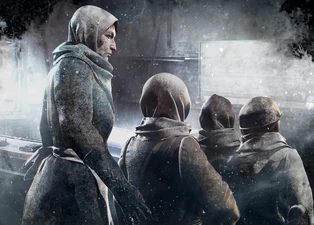
Child Shelters
Requires: Nothing. Mutually exclusive with Child Labor -Safe Jobs.
Law Cooldown: 18 hours.
Allows construction of Child Shelters. Passing this Law immediately raises Hope slightly. Initiates a quest to build a Child Shelter, which slightly raises Hope when completed.
This itself requires looking at the Child Shelter:

Child Shelter
Costs 20 Wood and 5 Steel.
Size 5x2 or 3x3
Has a capacity of 15 Children. If Child Shelter capacity is greater than total Children in the city, then a small increase to Hope is applied. Child Shelters must be at least Chilly to function. +2 Heat.
But wait, there's more to consider, as not only is this a paired Law, but it's our first example of such a pair then gating further Laws, so let's show those real quick:

Child Labor -All Jobs
Requires: Child Labor -Safe Jobs.
Law Cooldown: 36 hours.
Now Children can work almost all 'generalist' jobs that allow both Workers and Engineers to perform them, including that Children can now participate in the construction and demolition of buildings and roads. Passing this Law also slightly raises Discontent and slightly lowers Hope.
Okay, what about what's locked behind Child Shelters?

Medic Apprentices
Requires: Child Shelters.
Law Cooldown: 36 hours.
Instead of sitting in Child Shelters during the day, Children will increase Efficiency of medical facilities by up to 30% from 11:00 to 18:00. There must still be sufficient functional Child Shelters.
But wait, this is another paired Law! We're covering 5 Laws all at once:

Engineer Apprentices
Requires: Child Shelters.
Law Cooldown: 36 hours.
Instead of sitting in Child Shelters during the day, Children will increase Efficiency of Workshops by up to 20% from 11:00 to 18:00. There must still be sufficient functional Child Shelters.
Okay, that's a quick summary of all 5, so on to detailwork and conclusions.
I'm going to start by saying that Engineer Apprentices is a trap choice. It seems like it should be great, since research is so important, but Workshops have weird behavior where going past 1 Workshop working at 100% Efficiency has massively diminished returns. Say you have 1 Workshop and Child Engineers: you won't get 20% faster research between 11:00 and 18:00, it'll instead be 30% of 20%, meaning you're only at 106% research speed. Since you also only get the bonus for 7 hours, it's even less than a 6% increase, because the Workshops run for 10 hours, leaving 3 entirely unboosted: you're really getting 70% of a 6% increase, so a 4.2% increase per day.
This, by the way, is the BEST-CASE SCENARIO for Engineering Apprentices, as the Workshop weirdness gets worse as you stack up more boosts. If you have 4 Workshops and 4 Child Shelters, the fourth Workshop is gaining a 2% boost from the fourth Child Shelter, and still only for 70% of the workday, so only 1.4% added research speed per day. Furthermore, Extended Shift and Emergency Shift can increase Workshop work hours, but not apprentice work hours, further reducing the proportional impact of Engineer Apprentices!
Also, you might be wondering why my 4 Workshop scenario involved specifying 4 Child Shelters. This is because Engineer Apprentices is an example of Frostpunk being invisibly weirdly simulationist, where the apprentice bonus is sent from a given Child Shelter to a given specific Workshop with no input from the player, with the bonus scaled to the proportion of the Child Shelter's capacity being used. eg if a given Child Shelter only has 5 Children in it, it will only provide 1/3rd of the full 20% bonus. So if your Workshop count is higher than your fully-occupied Child Shelter count, you get even less benefits, while having the Child Shelters outnumber the Workshops just means having idle Children.
Altogether, Engineer Apprentices has so negligible an impact it's genuinely basically nothing.
Its alternative, Medic Apprentices, is more appealing, though still not great. Not only is its maximum bonus +30% rather than +20%, but medical facilities don't have the Workshop's diminishing returns system; 30% faster healing is 30% faster healing. This comes with the caveat that medical facilities always operate 24 hours a day and so a boost for 7 hours is applying less than 30% of the time, so the 'average' improvement is under 10%, and they get further dragged down by the fact that the game makes normal illness rolls only in the 2:00-6:00 period, so people start treatment up to 9 hours before the Medic Apprentices; this isn't too important with Medical Posts, but an Infirmary cures regular illness in 12 hours when at 100% Efficiency. You can get 144% Efficiency passively in most scenarios, resulting in a regular illness being cured in about 8.3 hours: at that point Medic Apprentices may well clock in only after most or all of the night's Ill people have been cured!
You might notice I just said both Apprentice Laws barely do anything. This in turn is a hit to Child Shelters: you shouldn't pick Child Shelters in pursuit of one of the Laws behind it, so Child Shelters better compete with Child Labor -Safe Jobs on its merits.
Child Shelters don't compete with Child Labor on their own merits.
First of all, 20 Wood and 5 Steel for every 15 Children in your city is a noticeable resource burden. In the early game, that's more expensive than housing 20 people! It also requires committing labor time to building the Shelters, it eats an alarmingly large amount of space, it specifically has to eat Heat Zone space and/or has to burn Coal on running a Heater in each Shelter, and then the payoff is three small bumps to Hope.
Now, Hope is important to be able to boost in A New Home, The Fall of Winterhome, and arguably The Refugees, so on paper Child Shelters should be pretty worth considering for Hope boosting. 3 small boosts to Hope vs Child Labor -Safe Jobs being a small penalty to Hope is a pretty big gap in Hope impact. Unfortunately, we once again return to Laws having events secretly tied to them and this reliably warping Law balance: Child Shelters and the Apprentice Laws have zero events tied to them, while Child Labor -Safe Jobs reliably triggers a chain of three events.
Now, prior events I've described were Bad Things, so you might be confused as to why I'm presenting this as making Child Labor better. Indeed, the event chain itself consistently presents these events as if they are Bad Things, but mechanically they're all Very Good Things.
Event 1: A kid gets a booboo in an accident. You're asked to give them a day off. If you agree to this, Hope slightly increases, but the kid can't be assigned to any task for 24 hours. Note that this 'injury' has no mechanical consequences: you don't have the Child needing medical care. They just refuse to work for a day is all.
Event 2: A mother is scared for her child and begs you to not send them to work for a day. This is narratively different from the prior event, but mechanically it's the same; agree to get a slight Hope increase in exchange for a Child not doing any work for 24 hours.
Event 3: People want you to give working kids twice as much Rations, forever. If you agree, Hope slightly increases, and... that's the only consequence. I assume the double Rations behavior is intended to kick in, but it's bugged or not coded in or something, so this is just a free Hope increase.
This event chain heavily undermines the idea of picking Child Shelters for the Hope advantage. Child Shelters is +3 boosts, one of which is contingent on meeting a moderately demanding condition and so can be lost kind of readily, while Child Labor -Safe Jobs is a -1 followed by +3. Now, I'm not completely certain these Hope changes are genuinely all the same amount, but they're definitely pretty similar, and 3 minus 1 is 2: Safe Jobs is essentially only slighly behind on boosting Hope compared to Child Shelters, because this event chain is essentially a completely free and completely permanent boost to Hope. A 'cost' of benching a laborer twice, where you only have access to that labor due to the Law that leads to the benching, is not really a cost. Child Shelters is only actually noticeably ahead on Hope if you are in fact building enough and keeeping them running.
Brief aside: note that the third event doesn't trigger in On The Edge. I assume the devs were attempting to be merciful since food is a dire concern in On The Edge, but in practice it's a small nerf to Safe Jobs since the increase in Ration usage doesn't actually happen... a very, very small nerf, since Hope isn't important in On The Edge, but still, whoops.
Also, I should point out that Safe Jobs informs you Children will be at risk of accidents, but as far as I'm aware this simply false. The first event claiming a kid got hurt is the closest you'll get...
... which at last brings us to finally talking about Child Labor -All Jobs, as 'kids can get hurt working' actually does apply with All Jobs. They can also die, specifically in the form of presenting you with an event where you either shut the workplace down for 12 hours, or keep it working but instantly kill the Child. This specifically only applies to job types not unlocked by Safe Jobs, and it also isn't a risk when Children help build roads or buildings, but there's absolutely no way to make the hazards stop other than just not assigning Children to non-safe jobs. And unlike most events that require a Law be passed, this is not a one-time thing: kids will intermittently get trapped in heavy machinery so long as you keep assigning Children to worksites unlocked by Child Labor -All Jobs, with nothing you can do to prevent it other than 'don't assign kids to those worksites'.
While Safe Jobs is a very useful Law, giving you a bunch of free labor and free Hope, Child Labor -All Jobs is a Law I largely recommend skipping. Its Hope penalty is not offset by events, taking advantage of it is a constant risk of death or facility shutdown, and frankly there's generally no added value to Children being able to be assigned to Coal Mines and so on. Safe Jobs already increases your ability to assign labor to 'unsafe' jobs: Children taking over Cookhouses and Hothouses frees up Workers and Engineers, who can then do the 'unsafe' jobs. All Jobs only adds value if you have more Children than safe jobs, or simply desperately need maximum labor on specific unsafe jobs and your Workers and Engineers can't cover it all... and frankly, no scenario is designed so it's particularly plausible to have real use for Child Labor -All Jobs. On The Edge is the closest to making it potentially appealing, as Cookhouses and Gathering Posts are the only safe jobs available in that scenario, your population is tiny, your labor needs are fairly high, and it's particularly easy to end up low enough on Workers that you may seriously eyeball All Jobs... and that comes with the qualifier that you never have more than 15 Children in On The Edge, limiting the value of expanding their labor utility, not to mention making this arguably the best scenario to go for Child Shelters.
tl;dr version: I feel it's pretty difficult to argue for anything other than grabbing Safe Jobs but ignoring All Jobs.
It's worth pointing out that Frostpunk's scenario details further drag down Child Shelters in varyingly obvious ways. The Fall of Winterhome locks you into Child Labor from the start, The Arks and The Last Autumn have no Children and so the Children Laws are unavailable, The Refugees has an incredibly tiny map and large number of Children that makes Child Shelters incredibly burdensome, A New Home WILL ultimately disable all your Child Shelters no matter what you do... On The Edge is the only scenario where Child Shelters doesn't have the scenario's design further stack things against Child Shelters. So basically it's that or Endless Mode if you want to see Child Shelters be a vaguely viable choice. (To be fair, there's an argument that in On The Edge Child Shelters is genuinely the superior choice)
Narratively, this entire Law branch is just weird to me. The notion that children shouldn't work is a very, very modern luxury, and it's still not remotely a universal standard even in affluent countries. The idea of Victorian England suffering an icepocalypse and a bunch of non-nobles struggling to survive in these miserable circumstances default to having kids play instead of directly contributing to immediate survival tasks just feels historically illiterate. I'd essentially expect Safe Jobs to be default behavior, not the Generator Tyrant having to formally demand kids do work. Similarly, apprenticeships were still very normal back then; I'd really expect child apprrentices to be a default behavior, not an optional Law. Mind, a sensible implementation of such an apprentice system was probably never an option in Frostpunk's engine or design given how it wants your citizens to be omnnicompetent, interchangeable labor, with individual skillsets only very loosely represented by the inviolate Worker/Engineer divide, but that doesn't really explain why Frostpunk went with this strange setup.
I'm also not a fan of the Child Shelters in particular, in terms of narrative/gameplay intersection. They're basically daycare centers in concept, but you don't assign any adults to actually keep the kids safe and so on, the kids just go sit in Kid Jail for 7 hours with no adult supervision, which is not exactly a great way to keep kids safe. They also are frustrating for how they're such a weird choice for a specialized structure; multi-functional spaces are a natural thing to want when resources are limited, and 'kids stay out of the way of adults during the day, people sleep at night' pretty obviously lends itself to having nighttime sleeping spaces double as daytime child safe spaces. Why aren't Child Shelters either a Law modifying existing housing usage, or their current behavior but also doubling as housing? This would also make them more mechanically appealing, for that matter...
There's definitely worse Law designs in Frostpunk, but the child Laws are some of the most confusing to me.

Emergency Shift
Requires: Nothing.
Law Cooldown: 18 hours.
Enables a special ability at most workplaces, including resource piles and Ruins. This ability switches the site's working hours to cover the entire day, lasting 24 hours, but noticeably raises Discontent when activated. Has a 48 hour cooldown, specific to each workplace.
Emergency Shift is another Law with guaranteed events tied to it that noticeably impact its value and so on. It has... a lot of events, in fact. And their rules are weirdly complicated.
First of all, if you use Emergency Shift on a site with Children assigned to it, an event will fire and kill off a Child working there. The wiki claims this will only ever happen once, but it also says several other things about this event that I know for a fact are simply false, so I'm doubtful.
Second, once you've used Emergency Shift twice, an adult will die at an Emergency Shift location. Note that it isn't necessarily the place you used Emergency Shift at second: applying your first Emergency Shift to your Workshop followed immediately by your second Emergency Shift going to a Gathering Post in hopes of not losing an Engineer on day 1 can still result in a death at the Workshop. Also note that this event gives you a choice: end all current Emergency Shifts to bump up Hope slightly, or leave them running but raise Discontent some.
This event also brings us to the wiki being incorrect about the event where Emergency Shift kills a Child, as it presents it as an either/or scenario where Emergency Shifts only ever kills one person. Nope, the Child event is completely independent: it doesn't start the event chain I'll be getting into in a minute, it can still happen after an adult has died, and in fact the event chain in question ultimately lets you disable Emergency Shift-caused deaths, and if you do so and then Emergency Shift a child, they'll still die!
A related point is that Emergency Shift will never kill an adult if you apply it directly to a resource pile. (Applying it to a Gathering Post can still cause a death) Ever. Note that I specified 'an adult', however: though the wiki presents resource piles as fully safe to use Emergency Shift on, Children can always be killed by Emergency Shift, even on resource piles. Don't use Emergency Shift on Children unless you want deaths!
Note that these death events can be partially ignored through Shenanigans due to how janky their exact implementation is, but only partially. For example, the death occurs after a delay and can't kill people if nobody is actually assigned to an Emergency Shift worksite, but if you perform your second Emergency Shift, swiftly remove all citizens from that task, wait for it to time out, and then use Emergency Shift again... the death will attempt to occur again, and will keep trying to occur on future Emergency Shifts until somebody actually dies. As such, you basically have to accept a death if you want to really benefit from Emergency Shift.
Once this death occurs, your next Emergency Shift use will trigger a new event, where somebody is refusing to work because they fear becoming Death By Overwork #2. You can either agree to have them skip working for 24 hours, or demand they go back to work: both result in some Discontent occurring, but forcing them to work generates a fair amount, where letting them do nothing for a day generates only a little Discontent.
After this event, the next Emergency Shift-triggered event is a final decision of how Emergency Shift will work from now on; option 1 is to slightly raise Hope but cause Emergency Shift to require 5 Food Rations to activate from now on. Option 2 presents itself as 'do nothing: nothing will change', but its actual effect is that Emergency Shifts will forever have a chance of killing people. So your actual choice here is 'do Emergency Shifts cost Rations, or do they kill people?'
Note that this third event never fires in On The Edge, and so Emergency Shifts are completely safe past the first death and still don't cost Rations. Abuse Emergency Shift in On The Edge! You're meant to!
This entire event chain notably distorts Emergency Shift usage, particularly on higher difficulties and if challenging yourself in other ways. You simply have to accept 1 death if you want to use it regularly, you have incentives to engage in funky preplanning to control the consequences of the first two events, there's an artificial incentive to trigger a bunch of Emergency Shifts when your next one is going to trigger the third event so you can skip paying Rations on those Emergency Shifts, and of course it means in the long haul you'll need to budget food beyond your city's regular hunger needs and otherwise account for the Ration cost for timing and so on. (Unless you go for permanent possibility of death, I guess)
Less important but worth mentioning is that there's an event that can kick in still later whose exact trigger conditions are unclear to me; you'll get people questioning the need to use Emergency Shifts so heavily, and you'll have 2 or 3 options. Option 1 is to agree that this is a bit much, which will disable all active Emergency Shifts, set any Extended Shifts to being a normal shift, and impose a quest to not use Emergency Shift for 3 days, which mildly increases Hope if completed but heavily reduces Hope if failed. Option 2 requires access to the Faith or Order security teams and so it doesn't even display in The Arks and On The Edge, and is 'force them to work', which makes this event consequence-free. Option 3 is to ignore the issue and have Discontent rise slightly.
Also real quick: the wiki says there's two more Emergency Shift events specific to A New Home, which can only occur once the endgame plot has started. The wiki indicates they overrule death events entirely, but I've personally not seen these events; even on Extreme, A New Home is so easy I've never had reason to use Emergency Shift by that point in the run. I already am done caring about research, have thousands of all resource types in storage, have plenty of Automations for nighttime work, etc.
With all that event stuff covered, where does that put Emergency Shifts?
Well, it's amazingly good and in fact is kind of over-centralizing. Unless you are committing to having your run be fully deathless, basically every run should have Emergency Shift and be using it on the regular. There's several reasons this is so, but by far the biggest one is research mechanics and research's impact; the funky Workshop behavior I covered some earlier works out to making hours worked vastly more relevant than Workshop count, and it's fully sustainable to build two Workshops and have them take turns working through the night so research is advancing all 24 hours of the day, every single day, rather than only 10 hours per day. Emergency Shift thus lets a player power through the tech tree 140% faster for basically free, which is ridiculous. For reference, the Workshop diminishing returns for stacking are such that achieving what 2 Workshops alternating Emergency Shifts accomplishes would require 12 Workshops to match if you had those 12 Workshops only working normal 10-hour shifts... and the 12 Workshops are only equivalent to the 2 Emergency Shift Workshops if you specifically are consistently emptying whichever Workshop isn't currently on an Emergency Shift. If you just man both continuously, instead you need 15 Workshops to have the 10-hour workday setup advance research at equivalent speed! That's 75 Engineers vs 10 Engineers!
This is unfortunate, as its clear the devs targeted scenario design around much slower research speeds; utilizing Emergency Shift to hyper-accelerate research often makes it easy to research everything you need well before you need it, rather than having to make hard choices about what is absolutely essential or pick out a specific strategy. A New Home is really easy, and I'm pretty confident a big part of why this is so is that the devs didn't recognize how easily Emergency Shift turbocharges research; even on Extreme difficulty, where research takes much longer, it's genuinely possible to get every research done before the scenario finishes, primarily thanks to Emergency Shift.
Outside hyper-accelerating research, Emergency Shift is very useful but not so absurdly distortive. It can be used on Hothouses if your food production isn't quite enough to keep up with your population's needs, same with Coal intake, it can be used for Steel and Wood intake if it's important you get enough to get a building built ASAP or just in general you're starved for Steel and more work hours is your only way to improve your Steel intake at the moment. You can even use it on a Factory if you're in a hurry to get an Automaton or Prosthetic(s) out faster, such as if an Automaton isn't going to quite finish before normal working hours end and you don't want it missing an entire night of work.
Note that Emergency Shift can only be used on buildings whose default shift is 8:00 to 18:00. This is most buildings, but eg you can't apply it to the Public House. One of the most significant examples is Hunters Huts (And Hunters Hangars), as they honestly seem like they should be a perfectly sensible option for such, but they aren't; this is one of several reasons Hothouses are preferable for Food production if Steam Cores can be spared. I should also point out that if an Automaton is assigned to a building, you can't activate Emergency Shift, which is fair since they already have a 24-hour workday; Emergency Shifting an Automaton would be a pointless Discontent boost.
More confusing is that a building having standard work hours doesn't guarantee it can use Emergency Shift; Faith's Field Kitchen in particular can't change its work hours at all, inexplicably denying options you're liable to intuitively expect to be valid.
Note that Emergency Shift should be used before regular shift hours end. If you wait until 18:01 to slap Emergency Shift onto a Workshop, what'll usually happen is that everybody has committed to eating and won't actually contribute research progress until they've finished eating, whereas if you use Emergency Shift before they clock out, they'll stay on the job a full 34 hours and only grab a meal the next day. Also note that if Emergency Shift costs Rations to activate, activating it doesn't actually make the citizens any less hungry.
Which segues neatly into: when it comes to the mechanics/narrative intersection, I intensely dislike Emergency Shift, as it really exacerbates Frostpunk's inherent jank regarding how it models your human population's needs.
See, that thing I just described of skipping a meal for a full day? Unless you're playing on Extreme, this is itself another advantage. And even on Extreme, it's not really a disadvantage. I'll get into the full details in a later page, but the short version is that while your citizens prefer to eat once every 24 hours, they don't actually need food every 24 hours unless playing on Extreme. Forcing a work crew to skip a meal thus actually extends your food for free, preventing gratuitous Ration expenditure, and indeed the event that makes Emergency Shift permanently safe but cost 5 Rations is much less of a cost than it sounds if you're playing below Extreme: spending 5 Rations to force 10 Workers to work through the night and skip a meal is effectively spending 5 Rations to prevent 10 Rations from being eaten! Even using it on eg a Workshop with its 5 employees means you're spending 5 Rations to skip spending 5 Rations: it's only on Extreme that the Ration cost is genuinely lowering how far your food supply goes. (Or if you Emergency Shift a building with fewer than 5 citizens working, I guess)
Similarly, you'd think Emergency Shift would be problematic to abuse due to sleep deprivation being a thing, but... nope! One of Frostpunk's loading screen tips directly claims your citizens need sleep, and this is a lie: a citizen with nothing to do will 'rest' at night in their home or around the Generator if they don't have housing, yes, but Frostpunk citizens don't get tired in any sense. They don't become impaired and accident-prone when tired, they can't die of sleep deprivation, they won't unavoidably fall asleep at some point.. the only reason you can't work a citizen continuously for the entirety of a scenario is because they need to eat... except I just lied because food mechanics are insane... In Frostpunk's world, resting is just filler idle activity with no mechanical function and no serious enforcement.
Altogether, the result is that the primary reason to not abuse Emergency Shifts everywhere basically continuously is that it generates too much Discontent for maximum abuse to be continuously sustainable. (I should emphasize: I said maximum abuse isn't continuously sustainable. You can sustain continuous abuse, you just can't use it on all your jobsites continuously)
This is broadly a frustrating aspect of the game: it gestures regularly at the idea that exploiting and abusing people is bad, but its primary method of supporting this message is to say people will hate you for doing so, with only minimal representation of the consequences such has on the people being exploited. For me, this frustration is two-fold: firstly, I fundamentally dislike how pop culture is broadly prone to this exact approach, where abuse and exploitation are presented as only to be avoided performing if you either are a person who cares about morals or ethics, or if the anger you're generating has a real probability of provoking people into attacking you. It's toxic nonsense and it's absurd to me how normalized it is.
Second, Frostpunk itself clearly views itself as an Artsy Game in which the player makes Serious Moral Decisions whose Consequences Matter, but does a very poor job of preparing the field appropriately. Emergency Shift is an absurd amount of free labor whose primary negative consequence is that it makes people mad at you, which itself is generally a really trivial issue unless you do something really stupid like applying Emergency Shift at 12 workplaces all at once. The game's systems simply don't provide a strong framework for people to get stressed, to suffer burnout, to get exhausted and become worse at their jobs, and what options it does have don't get properly leveraged; illess is a mechanic in Frostpunk, but overworking people doesn't make them sick more regularly. Even though Frostpunk has events for people being maimed by accidents and has a citizen state expressly for representing limb loss, nobody will ever have such happen in an Emergency Shift, never mind how many Frostpunk worksites involve very heavy machinery that could trivially remove a limb if someone was careless on the job, and never mind that the game recognizes the notion that carelessness around heavy machinery can be deadly. (It just only recognizes it for Children, for some reason)
As such, Frostpunk is frustratingly bad at producing an experience it clearly has as an actual goal. I find it an enjoyable game overall, but I enjoy it in spite of its efforts at being an Artsy Game with Serious Moral Decisions; it largely fails at this particular goal, being interesting for completely different reasons.
Returning to more pure mechanics for a moment, I should note that a non-trivial hazard to careless abuse of Emergency Shift is that the citizens will of course not be available for constructing buildings during normal off-hours. If you need a lot of buildings built and have a relatively small workforce overall, it's easy to accidentally leave yourself with barely anyone available for construction and so eg Tents don't get built in time and so you end up with an unnecessarily large number of ill people. (Or fail a promise to build sufficient homes, or both) The larger internet seems to be of the opinion that Emergency Shift should always be your first Law in every valid scenario, but I personally prefer to start with Child Labor -Safe Jobs in most cases, as this labor management issue is reliably at its most pertinent on the first night, and normally having Children added to the labor pool means 15 people working immediately to bring in resources in time for the first night. It also delays the Emergency Shift event chain's start, which for one thing means putting off losing a laborer, effectively adding some number of Worker Hours compared to prioritizing Emergency Shift.
The main reason I'm not strongly convinced my preference here is genuinely the better strategy is that it significantly delays access to our next Law:

Extended Shift
Requires: Emergency Shift.
Law Cooldown: 18 hours.
Most places that work from 8:00 to 18:00 now have a toggle to set their work hours to 6:00 to 20:00, extending the workday from 10 hours to 14 hours. Every building that is manned and has this toggle enabled slightly raises Discontent, but this Discontent will instantly vanish if the toggle is switched back or if citizens are fully de-assigned from the building. Passing this Law immediately slightly raises Discontent.
Extended Shift is less powerful and centralizing than Emergency Shift, but solely because Emergency Shift is so distortive of research in specific. Now, to be clear, Extended Shifts has a powerful impact on research as well, since Workshop mechanics putting high focus on hours worked is pertinent to it as well, but 40% more research hours is simply not as absurd a boost as 140% more research hours. And of course Extended Shift is gated behind Emergency Shift, so if you have Extended Shift, you definitely have the option of Emergency Shifting Workshops.
Anyway, outside of research I would say Extended Shift is a much better Law to pass than Emergency Shift. It's a 40% increase to basically anything you want more of, it can't kill people and never gains a Food Ration cost or some other cost, and you can pretty trivially apply it to basically every relevant job for functionally free. Since its Discontent effect is very granular and easily tuned at will, there's no risk of over-applying it and getting a game over because you can't get the Discontent under control in time...
... and indeed, Extended Shifts is the lynchpin to one of the dumbest, easiest exploits of the game: grinding high Discontent for free Hope.
See, I mentioned earlier that 100% Discontent fires an event where you need to get Discontent below 75% to avoid a game over. Extended Shifts having its Discontent disappear instantly upon toggling it off means that if you have Extended Shifts on all over the place, you can then go around toggling it off until Discontent drops below 75%, netting a Hope boost. Then just toggle it back on everywhere; so long as it wasn't either between 6:00 and 8:00 or between 18:00 and 20:00, you don't even lose any labor time to doing this, you really do just get the Hope for completely free, and can easily repeat this on the regular.
Yeah, uh, Extended Shift really needed different mechanics.
The wiki indicates that each workplace on Extended Shift raises Discontent by 2.5%, or 3% if on Extreme, so ideally you have over 10 places on Extended Shift if you want to do this. (Or at least 9, if on Extreme) I haven't bothered to try to confirm those numbers, but they seem more or less correct to my own experience.
Do note that heavily using Extended Shifts will intermittently fire an event complaining about constant Extended Shifts use. If you have Faith Keepers or a Guard Station, you can ignore this for free, but otherwise you'll be forced to choose between ignoring the complaining and suffer a modest Discontent increase, or accepting a quest to not use Extended Shift anywhere for 3 days; Hope rises on success, but falls on failure while Discontent rises. In practice you should almost always just take the Discontent hit, of course...
Also note that Extended Shifts can interfere with building construction, but... not as much as the game is liable to lead you to expect. See, the hours Extended Shift adds to worktime are labeled by the game as 'free time', and the game will speak as if building construction happens during 'free time' and not at night when people ostensibly need to rest, but this is only sort of accurate. In actuality, building construction can happen in any part of the day, it's just citizens assigning themselves to construction tasks has a fairly low priority, and 'resting' is a nighttime task where Frostpunk's citizens pretend to sleep; between that and standard jobs being high in priority, the 'free time' periods are certainly where the devs meant for construction to mostly happen, but it's not actually very stringent. I'm pretty sure 24:00 is the actual cutoff point where citizens want to pretend to sleep, but whatever the exact moment is, I know for a fact that citizens getting off Extended Shifts will in fact still assign themselves construction tasks. And once a citizen has assigned theirself a construction task, they're committed to it, even if that means they stay on it until 6:00; since citizens sleeping is a fake task of no mechanical value, it's perfectly fine for people to work all night. It's basically more free labor extracted, in fact.
Which would bring me to complaining about how toxic and dumb that is, except I just did that with Emergency Shift. The exact details are different, but fundamentally they're both 'extracting maximum labor is only bad because it makes people mad'. Extended Shifts doesn't even have a death-by-overwork event to limpwristedly gesture at other ways such is bad, unlike Emergency Shift, so that's a mildly substantial difference. I guess.
What I'll instead focus on is how absolutely bizarre it is that Extended Shifts is gated behind Emergency Shift. I can metaphorically squint and see how it could be viewed as a workplace culture creep representation, where pulling an all-nighter in a pinch becomes working an hour late semi-regularly becomes working 2+ more hours every day as your default workday, but overall I'd expect from both a game design perspective and from an in-universe perspective for it to go the other way around: Extended Shifts gating access to Emergency Shifts.
Mind, this itself touches on how Law requirements are in general prone to not making any sense, both in-universe and in game design terms. A Law building directly upon a prior Law is fair enough (eg House of Pleasure modifying, and thus requiring, Public House is sensible), but why does Fighting Arena gate access to Public House? It's especially weird because Frostpunk's actual research system has very few cases of a technology being gated behind a functionally-unrelated technology; it's Traditional Video Game Tech Trees where I'm actually used to seeing 'Thing A gates access to Thing B for no obviously logical reason' be a default aspect of the design. Frostpunk flouting tradition over there but bringing it into the more novel Law system is simply confusing.

Cemetery
Requires: Nothing. Incompatible with Corpse Disposal.
Law Cooldown: 18 hours.
Unlocks the Cemetery building, initiates a quest to build a Cemetery within 3 days, and slightly raises Hope. Completing the quest successfully also raises Hope.
The Cemetery goes like this:

Cemetery
Costs 10 Wood.
Size 3x2
Bodies will be buried here. A few citizens will attend a funeral each night, refusing to do other work for a bit. Only one copy can exist in the city at any given moment.
This isn't very meaningful to cover by itself, as this is another paired Law case. So let's get into the partner it competes with:

Corpse Disposal
Requires: Nothing. Incompatible with Cemetery.
Law Cooldown: 18 hours.
Unlocks the Snow Pit building, initiates a quest to build a Snow Pit within 3 days, immediately raises Discontent and lowers Hope. Completion of the quest does nothing except end the quest.
This of course has its own structure:

Snow Pit
Costs nothing.
Size 3x2
Bodies will be buried here. If inside an active Heat Zone, will fail to prevent corpse-caused disease risk. You can have any number of Snow Pits, but once a Snow Pit exists you can't demolish a Snow Pit if it's your only current Snow Pit.
These two Laws are about choosing how you handle your dead: do you bury them with dignity and effort, or do you sloppily throw them into a hole in the ground and move on?
Like most paired Laws, this is annoyingly skewed of a choice. First of all is the ongoing jank of Law-triggered events: while a Cemetary raises Hope twice vs a Snow Pit lowering Hope once, in actuality Cemetary always triggers an event that lowers Hope with no input from you, whereas Snow Pit triggers an event that lets you choose between 'lower Hope' and 'raise Discontent'. Cemetary is still better for Hope, but by less than the obvious information suggests.
More importantly is a mixture of what Laws each of these gates plus the simple fact that you really shouldn't be planning around deaths occurring.
But let's cover those further Laws real quick:
Ceremonial Funerals
Requires: Cemetery
Law Cooldown: 36 hours.
From now on, Hope loss from deaths is halved.
Note that this is not retroactive: it only affects deaths that occur after it has been passed. It's also the real main draw of Cemetery, but, well, let's get everything else out of the way first;
Organ Transplants
Requires: Corpse Disposal.
Law Cooldown: 36 hours.
Permanently raises base Efficiency of Medical Posts, Infirmaries, and Houses of Healing from 100% to 120%.
Note that 'base' efficiency qualifier: Organ Transplants stacks multiplicatively with other Efficiency boosters, except when it buggily behaves as an additive modifier. Another way it's buggy is it will erratically provide a full 20% Efficiency to a manned building where nobody assigned has actually started contributing labor to that building.
Further note that the narrative justification is that you're harvesting organs from Snow Pit corpses, but this has no mechanical reality to it. The bonus applies even if no one has died: it's just free Efficiency. By a similar token, passing this Law provokes upset dialogue, but... no effect on Discontent and Hope.
Also, where Ceremonial Funerals was the end of its Law chain, Organ Transplants leads to:

Organic Fertilizer
Requires: Organ Transplants.
Law Cooldown: 45 hours.
Enables the Utilize The Dead ability at Hothouses. This ability requires 3 corpses per use, has a cooldown of 1 day, but increases Efficiency by 20% at that Hothouse for the next 3 days. (Using the ability again before the effect times out only refreshes the duration) Passing this Law immediately lowers Hope slightly and raises Discontent some.
I... really don't get why stealing organs from corpses doesn't upset citizens, but burying the dead to fertilize crops does upset them. Especially since the actual body-using ability doesn't upset people, it's just the Law being passed to enable the option that's upsetting. Huh?
Anyway, all that out of the way, back to 'Corpse Disposal is clearly the better choice by default'.
So, earlier I noted that you shouldn't be planning around casualties. The Cemetery's advantages over the Snow Pit are:
1: Slightly better for Hope.
2: Makes deaths less bad for Hope when they happen.
3: The Cemetery can be safely placed in a Heat Zone.
4: In the event that Discontent is very high, Cemetery can be passed without needing to lower Discontent, whereas Corpse Disposal cannot. (Note that Hope doesn't have a similar block: the game will happily let you drop Hope to 0% by passing a Law, with no warning of how dangerous this is)
By contrast, the Snow Pit's advantages are:
1: It costs no resources to build. This is a very large edge if picking your corpse Law very early in a run, when resources are limited.
2: The Snow Pit can be relocated if you decide your first placement is problematic. The Cemetery can never be moved, ever.
3: The Snow Pit leads directly to a completely free boost to healthcare, reducing the probability of death and just generally ensuring citizen labor is more consistently available because ill citizens will recover faster.
4: The Snow Pit leads to a potential Food production boost, which once again can potentially prevent deaths.
5: The Snow Pit doesn't tie up labor regularly on funerary ceremonies.
In short: the Snow Pit is largely superior if you don't expect to suffer many deaths, and in fact helps a fair amount with preventing deaths in the first place. Its also worth emphasizing that while the Snow Pit will stop functioning if it's placed inside a Heat Zone, it's not like you want to put the Cemetary inside a Heat Zone: that's warm space that could have gone to housing or a workplace!
I would in fact argue that the Cemetery's main draw is its ability to be passed even if Discontent is currently very high. This is kind of whatever by default, but on higher difficulties it can be difficult to keep Discontent low enough to pass Corpse Disposal while also keeping productivity high enough to stay on top of your city's needs. If a death has already happened, it's important to get one of these two Laws in short order, before your city is crippled by illness; my first Extreme run of The Arks ended up passing Cemetery precisely due to all this, for example.
On that note: these Laws are important if you ever suffer any deaths, because bodies will create a magic global disease risk that can only be mitigated by burying the bodies. I'm unclear on the exact details of this mechanic, but it's a pretty brutal rate of illness if even one body is ignored for more than about 3 days. (It's fine to pass a Law and then someone dies shortly after: the disease risk takes long enough to kick in you'll be fine so long as your next Law is Corpse Disposal or Cemetery and you get the building built reasonably quickly)
I describe it as a 'magic global disease risk' because it doesn't seem to have any meaningfully physical mechanics. Corpses don't rot and then start making nearby people sick or something; people just start making arbitrary illness checks if an unburied body has lingered in the city for long enough. By a similar token, once all bodies have been buried, the checks completely stop: already-ill citizens can't make other citizens sick with whatever corpse-borne infection they have.
A related point is that the Cemetery's funeral ceremonies (The innate behavior: the Ceremonial Funerals Law doesn't make them happen) work very differently from what you're liable to intuit: they aren't prompted by a death, they don't have anything to do with corpse count, they just happen on the regular if you have a Cemetery, even if nobody has ever died in your run. This makes the funeral ceremonies a particularly consistent disadvantage in a completely counterintuitive way, tying up labor that would otherwise be willing to help with building construction/demolition.
In general, I don't really like this Law blob, both from a 'pure game design' perspective and in terms of the narrative representation aspect. I'd rather Ceremonial Funerals had 'refunded' some lost Hope and, y'know, occurred as part of burial, and the Snow Pit really calls attention to how weird the disease risk from corpses is in context. Am I supposed to assume my citizens idiotically hoard dead bodies only in Heat Zones if I haven't issued an explicit order regarding bodies? Are they just leaving the dead wherever they fell? (Well, mechanically... yes) Just getting bodies hastily dumped outside really ought to produce the Snow Pit behavior of bodies not rotting because of how intensely cold Frostpunk's conditions are.
Similarly, Organ Transplants is, uh, optimistic of a Law. I personally assume the absurd generousness of its mechanics are not truly intentional (I assume there was intended to be more involved and sensible mechanics that just... didn't actually get implemented), but even just focusing on the idea of late 1800s Britain making organ transplants from frozen corpses work, like, at all, that's... uhhhh... well, as best as I can gather, the earliest successful organ transplant in real life was in the 1950s. And in real life, organ rejection is a pretty major problem. Like yes, Frostpunk has magical steampunk robots and all, but this seems pretty absurd to want to put in the game at all.
I'm also just not terribly interested in the 'we should respect the dead' vs 'we should use everything to survive, even our dead' root dichotomy here. In general, Frostpunk's attempts to pose these questions to the player are perpetually a failure point in the design for reasons I'll go over more later, but this particular dichotomy is just... false and ahistorical. Better mechanics wouldn't fix that issue.
Anyway, on to the final branch of Adaptation Laws.
Radical Treatment
Requires: Nothing. Incompatible with Sustain Life.
Law Cooldown: 18 hours.
Immediately raises Hope and Discontent a little. From now on, Medical Posts can now treat Gravely Ill patients, but there is a 30% chance for each such patient to become an Amputee when successfully treated in this way.
Another paired Law, so let's look at its partner:
Sustain Life
Requires: Nothing. Incompatible with Radical Treatment.
Law Cooldown: 18 hours.
Immediately raises Hope and Discontent a little. From now on, Medical Posts will hold Gravely Ill patients in 'palliative care', which delays death from being Gravely Ill, but does not actually cure them. Such patients consume Medical Post space, potentially blocking patients who are Ill from getting treatment.
Radical Treatment vs Sustain Life is one of the only Law pairs I'd call 'balanced', and I'd say my reasoning is a bit funky on this.
The crux of the point is that most runs can and generally should switch to Infirmaries and/or Houses of Healing eventually, preferably kind of quickly. These two Laws only affect Medical Posts, so if you fully switch to Infirmaries an/or Houses of Healing, these two Laws simply stop mattering. As such, which you pick is a somewhat short-term decision, and may not matter at all of nobody ever falls Gravely Ill in the first place. Since they have identical effects on Hope and Discontent, that aspect isn't a relevant component.
If you're, say, in the middle of researching Infirmary and will be able to get one or two Infirmaries up immediately upon finishing the research, Sustain Life is pretty clearly the better choice: buying just enough time to get any Gravely Ill to better treatment. Outside that, things are more complicated.
First of all, I should explain Amputees.
Amputees are, as the name suggests, people who have had a limb amputated. In mechanical terms, Amputees are defined mostly by being unable to do any work. From a pure game design perspective, I'm... not strongly negative on this, as the game is using it as a punishment for being bad with your healthcare or doing an inadequate job of sustaining sufficient warmth in your city. (Citizens working or sleeping in -5 Heat can spontaneously become an Amputee, blamed on frostbite) My main criticism of it from this perspective is that unfortunately I feel this largely works out to being a harsher punishment than actually dying: this is particularly pertinent to Radical Treatment, as there's an argument that passing Radical Treatment to save some Gravely Ill people and then getting unlucky on the Amputee rolls such that you save all three Gravely Ill people but they're all Amputees is actually worse than letting them die. After all, Amputees still need housing and food, where dead people don't: dead people are only more bad for your city than Amputees if it's unacceptable to suffer Hope drops in your current conditions, or you don't have Cemetary or Corpse Disposal online, or if you expect to trivially get Prosthetics on the Amputees so they'll go right back to work with minimum delay. It's really janky design for this 'lesser-than-death' punishment to be arguably a 'harsher-than-death' punishment!
Which segues nicely into: from a narrative representation standpoint, I really, really dislike the handling of Amputees.
The notion that people losing a hand or part of a leg are instantly completely useless at all tasks is simply absurd. To be fair to Frostpunk, it's probably the least absurd piece of media I've seen manifest such a view; it focuses largely on physically intensive labor, after all. I've seen much more egregious works that have the audacity to act like a literal desk job is impossible to be performed by somebody who can't easily walk, and Frostpunk at least isn't putting forth that bit of outrageous nonsense...
... but it's still quite ridiculous of Frostpunk that Amputees simply become useless layabouts. I can accept Amputees being barred from some jobs; if the game didn't let you assign them to Hunters Huts at all, I'd accept that readily enough, if only as a gameplay simplification. But am I really intended to believe they can't contribute at all to even places like the Cookhouse or Public House? I'd also have been fine with Amputees broadly contributing less Efficiency to jobs, as a game-ified way of representing the more complex reality of living with a missing limb...
... which, mind, I suspect the devs weren't readily able to wrangle their code framework into exactly that solution. For example, part of why Child Labor -Safe Jobs is so favorable a Law in mechanics is that Children do all safe jobs just as competently as Workers or Engineers, never mind that they logically ought to be physically less strong than fully-grown adults, and also never mind the neurological development aspect of adults vs children. I somewhat doubt this obviously absurd scenario of Children being just as able at cooking, growing crops, physically hauling around loads of raw material, etc, came about by virtue of the devs genuinely believing it's realistic.
Even so, I'd really have preferred for Amputees to have been handled differently.
To be fair, there's an unreliable event where your Amputees can approach you wanting to help, where you can then spend 100 Wood to permanently improve Cookhouse Efficiency by 40%, where the idea is you built accomodations for the Amputees to work in the Cookhouse. The devs do recognize the possibility of somebody missing a limb doing work with some support. On the other hand, I kind of hate the event's mechanics: it's just a massive Wood expense for a magic Cookhouse improvement. Amputees don't even need to exist for it to work, and the cost is pretty outrageous when you consider 100 Wood can build five Cookhouses: what are these acccomodations, that they are so absurdly expensive?
Also janky is that for no clear reason said event absolutely requires the Care House Law has been signed. Why the devs set it up this way is beyond me; I frankly hope it's an accident, like they meant to tie the event to Radical Treatment but pointed it to the wrong location in the code without realizing it.
...
Anyway, also pertinent to Radical Treatment vs Sustain Life is more Law-based events. Oddly, Sustain Life doesn't have any, while Radical Treatment has 2 events.
In the first event, an Engineer will want a day off work to try to improve Radical Treatment's effectiveness. The wiki insists you need about 10 Amputees caused by Radical Treatment for it to trigger, but this is simply false: it's possible for it to trigger even if nobody has suffered an amputation. It can trigger even if you've dismantled every Medical Post and fully switched to Infirmaries, in fact. Anyway, you get two options: reject the Engineer's request and suffer an immediate Hope loss, or accept it for an immediate Hope boost but the Engineer can't be assigned to jobs for 24 hours.
Note that an Engineer is picked at random. You might expect it to pick from Engineers assigned to medical facilities, but no, it's any random healthy Engineer. By a similar token, the event presents it as a male Engineer making the request, but the game is perfectly happy to give a day off to a lady Engineer. (Frostpunk is often sloppy about this)
When the Engineer comes back, you'll be told the Radical Treatment amputation rate has been permanently halved. I can't confirm it actually lowers the rate to 15%, but I'm mostly confident it does actually lower it a respectable amount, as when I've relied on Radical Treatment for an extended period, it really did seem like Amputees slowed down after the event finished.
Overall, this event means Radical Treatment is on average slightly better than the 'raw numbers' suggest, but in a frustratingly erratic way. It's possible to pass Radical Treatment and have this event fire very quickly and proceed to prevent a lot of amputations, but it's also possible to have it be relevant solely as 'trade one day of one Engineer's labor for a Hope boost' because it only triggers after you've moved on from Medical Posts for good.
In the second event, a patient doesn't want to suffer an amputation. If you respect his wishes, a Gravely Ill patient will die, and you'll get a follow-up event where you choose whether to suffer a Discontent increase or a Hope decrease. If you instead insist on the amputation, the patient will become an amputee, and then what happens next is up to chance: either a follow-up event will occur where the patient thanks you and you get a free Hope increase, or the patient commits suicide.
The wiki insists the suicide is only possible if you haven't passed the Prosthetics Law, but I've had it happen even with that Law passed. I find it plausible that having Prosthetics in storage will disallow the suicide, though; I've only had the suicide happen when no Prosthetics were currently available. In any event, the wiki says you get an event pressing you to pass the Prosthetics Law in 5 days, or you can ignore it and lose Hope and have Discontent rise, but I've never seen this: when I've gotten the suicide, all I was allowed to do was go 'I see' and suffer the Hope loss and Discontent increase.
I'm also reasonably confident this 'patient doesn't want to suffer an amputation' event actually is tied to 'somebody is Gravely Ill at a Medical Post in specific', unlike the 'reduce amputation rate' event, as I've never had it trigger after I've already switched heavily away from Medical Posts. (And Gravely Ill patients will only go to a Medical Post if all Infirmaries/Houses of Healing are already full of Gravely Ill patients)
Anyway, all that context out of the way: as I said earlier, Radical Treatment vs Sustain Life is one of the more complex Law choices. Difficulty, scenario, and intended strategy can all noticeably impact which is the better choice for your run: how soon do you expect to get to Infirmaries? How many Steam Cores do you expect to be able to spare on Infirmaries? Does your scenario have access to Faith and Order or not, and if it does have them, which of them are you going to pick? How many Engineers are you going to be able to spare on medical duties? Are you going to be picking Extra Rations For The Ill or Overcrowding after this choice? Do you intend to grab and actually use Triage? How quickly do you expect to get a Factory online to potentially build Prosthetics for any Amputees Radical Treatment produces?
I started out preferring Sustain Life and thought it was just Obviously Superior, but it really is more complex.
Oh, and I should explicitly point out that Sustain Life doesn't keep Gravely Ill individuals alive indefinately. I'm not sure exactly how much time it gives them, but it is finite. I'm pretty sure it's also difficulty-dependent, as my experience is that on Medium if I take Sustain Life I only suffer lack-of-treatment deaths if I end up with so many Gravely Ill people there's not enough beds to fit them all (And I inevitably get Infirmaries and/or Houses of Healing up in a timely manner on Medium), whereas on Extreme I seem to lose people after maybe 3 days of palliative care.
I should also point out a bit of awkwardness with this Law pair: since they both cause Gravely Ill patients to be admitted to Medical Posts, and Gravely Ill patients always get priority, passing either of these Laws can be a mistake in timing that overloads your medical system and causes mass casualties. It's especially frustrating since this Law pair has to be worked through to reach Care House.
Speaking of!
Care House
Requires: Either Radical Treatment or Sustain Life.
Law Cooldown: 36 hours.
Enables construction of Care Houses, initiates a quest to build a single functioning Care House, and immediately raises Hope slightly. Completing the quest also raises Hope slightly.
So what's a Care House?

Care House
Costs 25 Wood and 5 Steel.
Size 5x2 or 3x3
Amputees and untreated Gravely Ill citizens will be admitted to Care Houses instead of regular housing. Care Houses have a capacity of 20 citizens, a base Heat of +2, fully count as housing for eg Fighting Arena purposes, must be at least Chilly to function (ie they stop functioning at -3 Heat and lower), and unlike normal housing have access to the Heater ability. Citizens in a Care House consume food at half the normal rate, and Gravely Ill patients living in a Care House will take longer to die from lack of treatment.
This is actually probably my biggest criticism of Sustain Life: that its functionality is substantially superseded by a Law it directly unlocks. This is also another good example of how the Law requirement chains are often just... confusing. Why isn't this a basic Law? Why do I have to work through Radical Treatment or Sustain Life to reach it? Pure game design-wise, I can sort of see why Sustain Life is put in front of it, since the Care House supersedes Sustain Life's function, but that itself raises the question: why is Sustain Life a Law at all? If instead Care House was directly competing with Radical Care, that would be very close to the current state but minus a Law whose existence seems purposeless. Alternatively, Care House and Radical Treatment could just be both basic Laws with no cross-interaction. That would make a lot more sense, and give players more options for strategizing: in general, the Law system using a 'tech tree' system is frustrating in part for how it unnecessarily limits player choice, reducing strategy variety.
But back to the Care House itself.
First of all, I should point out two funky bits to the Care House. Funky bit 1: if a citizen becomes Gravely Ill and assigns theirself to a Care House, for some reason they also de-assign theirself from their currently-assigned workplace. This isn't a general Gravely Ill behavior, it doesn't occur when citizens assign themselves to a Medical Post for Sustain Life purposes, it's just Care Houses that produce this for some reason.
Funky bit 2: the Care House's functionality as a special form of housing has a few rough edges to it. If you pull up the stats page for housing, it will tell you how many unused units of housing you have, and then inform you how many unused Care House spaces you have, without clarifying that these are overlapping numbers. That is, if you have a Bunkhouse totally unused and a Care House totally unused, the game will inform you that you have 30 units of unused housing space and 20 units of unused Care House space, and it's easy to think it instead means you have 3 unused Bunkhouses plus an unused Care House. Similarly, since citizens completely refuse to set foot in a Care House unless they're Gravely Ill or an Amputee, having your counts of citizens in either of those states change can catch you off guard regarding your housing situation, where eg you build a bunch of Prosthetics and at some point gain a homeless citizen even though your housing capacity and citizen total are both unchanged. A related point is that since the Care House only functions if adequately warm, unlike regular housing, a temperature drop can result in a sudden homeless population; the Care House is unique in its ability to allow homelessness to occur without tearing down or upgrading existing housing and without any citizens being added to the maximum population.
I should also mention I'm not entirely sure how the halved Ration use works in detail. Unlike 'double rations for working Children', I'm completely confident this piece of the Care House does in fact function, as it gets reflected in food usage predictions and I've never been caught out by my city using more food than stated, even when I'm on a razor-thin margin for food generation-to-usage and so even a small difference would in fact be impossible to miss. I'm just unsure what the game is specifically doing: do Care House residents only eat every other day? Does the game invisibly track half Rations and they just genuinely eat 0.5 Rations per day? Some weirder system? I dunno.
Also, building a functioning Care House will eventually fire an event that's a free small Hope boost, on top of the Hope for passing it and the Hope for building a functioning Care House. This is a really good Law for dragging up Hope, is what I'm saying.
Anyway, the Care House is a very useful but fairly funky building in how it fits into the game design. For one thing, it gives a janky incentive regarding Amputees, in that if you don't need their labor but your food situation is still not fully solved, it can be desirable to leave them as Amputees to extend your food budget. Most egregious is Children: if you don't go the child labor route, it's technically better for the city if all Children are Amputees, and a waste of Steel to install Prosthetics on them! The Care House is also broadly a building that can be very desirable early in a run, but which proper play will have it ultimately become a waste of space: once your medical care system is strong and your heating capacity is too high for even the worst normal temperature drops to bring housing and essential workspaces below -2 Heat, there's no reason to have Amputees at all, and Gravely Ill people probably don't come into being either unless maybe you're up on Extreme. The whole thing feels weird.
Also funky is the Heat situation. Since the Care House starts from +2, this means a very early Care House will actually provide more warmth than the Tents everyone else is sleeping in. It's only once you have widespread Bunkhouses that it's merely on par with regular housing, and only once you have Houses all over the place that it's overall behind. I honestly wish it had instead scaled its Heat bonus to your current housing technology: start from +1, add another +1 once Bunkhouses are researched, then another +1 when Houses are researched, and then a final +1 when the House heat boost research is finished. It would be slightly funky for the Care House to get those bonuses for free when regular housing has to be manually converted into each step of greater warmth, but I think it would be less funky than this setup. It does at least bnefit from Healthcare Insulation and so can ultimately arrive at the same +4 Heat as upgraded Houses, but... funky.
I actually have a similar opinion about Child Shelters, but more strongly so; part of why Child Shelters suck is that committing to them means raising your Coal demands as temperatures drop, because what's a toasty Generator Power level for fully upgraded Houses can leave Child Shelters unable to function without running their Heaters. This issue is applicable to the Care House, but I say it's worse with Child Shelters because...
1: Child Shelters directly competes with another Law, whereas Care House doesn't have to worry about being rendered invalid by being a bit weak.
2: As I noted a minute ago, Care Houses will eventually stop seeing use anyway, whereas Child Shelters never become obsolete.
3: Unlike Care Houses, Child Shelters don't get passive Heat boosts of any kind from any tech.
Regardless, in both cases I wish they'd tied their Heat level to your housing technology.
Still, even with all these rough edges to Care Houses, the main thing I'm strongly critical of is...

Prosthetics
Requires: Care House
Law Cooldown: 45 hours
Enables production of Prosthetics at Factories.
... whyyyy is Prosthetics gated behind Care House?
In general, my response to Prosthetics' design as a Law is: what the heck, Frostpunk??
(It's worth pointing out that Frostpunk 1886 decided to completely rework the Prosthetics Law, replacing it with a Law for makeshift Prosthetics, averting a lot of the jank I'm about to lay out. Progress!)
The first, biggest frustration here is the twofold lock aspect to this design: you need the Prosthetics Law to be able to make Prosthetics, but you also need the Factory researched from a Workshop -Factory being a moderately advanced research- and of course you have to build a Factory, which among other things costs a Steam Core. It's thus easy to end up passing Prosthetics and then sit uselessly on it for a number of days before it benefits you in any way. Alternatively, you may unlock and build a Factory only to realize you're a ways away from being able to pass the Prosthetics Law: this is less dramatic of a concern, but still annoying, and is particularly frustrating in On The Edge and to a lesser extent if doing a Builders Endless Mode run, since the Factory only produces Automatons and Prosthetics and Automatons are basically useless if you don't have a Generator.
That's pretty baffling on the face of it as a decision, but then for some reason Prosthetics both has an unusually long Law cooldown -45 hours is 2.5 times as long as the 18 hours seen on most Adaptation Laws- and is as 'deep' down its branch as any Adaptation Law ever is? Why is it it so demanding to reach and so 'costly' in Law cooldown value? If it was a no-requirement Law with an 18-hour cooldown, the double-lock issue would still be frustrating, but you'd be freer to fit it into your Law schedule with minimal impact. This isn't too important in The Arks and On The Edge, where you don't have Faith and Order Laws and so you just don't have that many Laws to work through in general, but it really stands out in The Fall of Winterhome, and is still obnoxious in A New Home and The Refugees.
And seriously, why is Prosthetics gated behind the Care House? I get that this entire branch of Laws is a bunch of medical Laws, so sure fine since Radical Treatment/Sustain Life acts as the gateway Law that's why you have to work through those, but the only connection I see between Care House and Prosthetics is they both are focused on Amputees... but that doesn't really explain this.
Uggghhh.
Focusing more on mechanics for a moment: Prosthetics are built at the Factory for 10 Steel apiece by default, which is, uh, bizarrely expensive. (A Bunkhouse costs 20 Wood and 10 Steel! How large are these Prosthetics??) I'd expect these to be, like... 2 Steel. (And only that much so the research that halves Prosthetic cost would remain straightforward to implement, frankly) You have an absolute maximum storage of 100 Prosthetics, but unless you take an Endless Mode run pretty far and just boredly dump resources into stuff for lack of anything better to do, you will probably never come remotely close to that cap. Prosthetics themselves have an actual process for being fitted: the Amputee must walk to a functioning medical facility (Medical Post, Infirmary, or House of Healing), at which point they will spend a facility-based time period getting their Prosthetic installed. (24 hours for a Medical Post, 12 hours for an Infirmary, 15 hours for a House of Healing) Each medical facility can only process one Prosthetic-fitting at any given moment, but this doesn't tie up 'doctor labor' in any way, it doesn't slow down treatment of the ill... functionally, the Amputee visits an automatic machine for installing Prosthetics that happens to only be installed in medical facilities.
This is part of why I find it so confusing that Prosthetics is gated by Care House, incidentally; if Prosthetics were installed at Care Houses, that would be slightly odd but overall intuitive, but nope, gotta walk to a treatment building.
Anyway, an implication of this is that if you want quick turnaround on Prosthetic installation, the Care House will ideally be pretty near at least one medical facility, as Amputees basically only leave their assigned Care House to eat. Having your Care House on the opposite side of the city from all medical facilities can easily mean Prosthetic installation takes forever and ever to actually complete.
Also, note that Prosthetics have no visual distinction at all, and indeed Amputees don't look any different from non-Amputees. Nor does the game invisibly track Prosthetic-havers as in any way distinct from your other able-bodied citizens: an Amputee Worker given a Prosthetic simply becomes a regular Worker.
An annoyingly frustrating aspect to all this how the player has essentially no control over the whole thing. As Prosthetics are added to the resource pile, Amputee citizens simply assign themselves the task of getting a Prosthetic in, as far as I can tell, a completly random order. This is janky in general, but can actually be meaningfully problematic in The Fall of Winterhome and On The Edge, as you can't ship citizens out if they're Amputees. The Fall of Winterhome in particular has an objective to ship out all the Children and starts you with a lot of Amputees, including several Amputee Children; there's almost certainly people out there who got screwed by Prosthetic assignment randomly being slow to get to the Children when they were down to the wire on this objective.
Also annoying is that clicking on the icon for Amputees will bring up a list of all Amputees in the city, and as far as I can tell there's no way to get a quick summary of how many Amputee Workers, Engineers, and Children you have; they all replace their class icons with the same Amputee symbol. Since you have no control over who gets Prosthetics, this nuisance is mostly exasperating rather than genuinely problematic, but it can be frustrating when trying to determine how much you ought to be prioritizing Prosthetics: if you have more Workers than jobs but could really use some more Engineers, it's important information whether any Amputees are Engineers, and what the proportion is.
Narratively, Prosthetics are... kinda ugh.
First of all, remember how I complained about how ridiculous it is for Amputees to be instantly useless? Prosthetics letting them work rather calls attention to this absurdity; while Frostpunk's Prosthetics are silly clockwork steampunk robo-limbs, the fact is the general notion of prosthetics for amputees is far from new. Anybody who has ever seen basically any pop culture with pirates in it has already seen such: a pirate's peg-leg is a simple prosthetic leg, and the pirate hook on the end of the wrist is a kind of simple prosthetic hand. The golden age of piracy that pirate-themed fiction is broadly drawing from started literally hundreds of years before Frostpunk is set! This is not Niche History Factoids; I'm more sympathetic to the fact that Frostpunk's devs probably didn't know that we have evidence of prosthetics going back to BC years, but I don't believe for a second that they didn't know about your stereotypical pirates. The notion that your Amputees can only get back to work once you've got basically-magitech prosthetics online is simply absurd; the 1500s gave us Götz of the Iron Hand, who had a prosthetic iron hand over 300 years before Frostpunk's date.
Second, the narrative elements of Frostpunk's Prosthetics really don't sound as convenient as the mechanical reality within gameplay. Endless Mode has special goodies specific to it for getting lore, and one of them is for Prosthetics, where it speaks of them as needing to be periodically wound up, like a clockwork toy. Alternatively, one might naturally expect these steampunk Prosthetics to operate on similar principles to Automatons (ie the game's steampunk robots), in which case we have the question: why does an Automaton need a periodic steam refuel, but not Prosthetics? Either way, I'd honestly more readily accept historical prosthetics being a low-mechanics-impact way of returning citizens to work than Frostpunk's weird clockwork cyborg limbs.
Yeah, I'm just... not a fan of this whole mess all-around.
Next Law!
Extra Rations For the Ill
Requires: Either Radical Treatment or Sustain Life. Incompatible with Overcrowding.
Law Cooldown: 36 hours
Medical Posts, Infirmaries, and Houses of Healing gain the ability Extra Rations. This ability spends 10 Food Rations to raise the building's base Efficiency by 50% for the next 24 hours, and has a cooldown of 1 day.
Our final paired Law until we get to The Last Autumn content, so we need to over its partner Law:
Overcrowding
Requires: Either Radical Treatment or Sustain Life. Incompatible with Extra Rations For the Ill.
Law Cooldown: 36 hours
Immediately slightly raises Discontent. Doubles the maximum patient capacity of Medical Posts, Infirmaries, and Houses of Healing, but if any building is over its normal capacity then a modest Discontent penalty will be imposed until no building is over its default capacity.
Like so many paired Laws, I'd argue this one is pretty skewed, though less absolutely than some cases.
Down on Medium, I'd argue that Extra Rations For the Ill is generally the better choice. Food is rarely much of a problem on Medium, and improving Efficiency at medical buildings reduces the time patients expect to spend sick, directly increasing how many labor-hours you're getting out of people. Medium difficulty also makes it fine to be a bit slow to treat individual patients who are regular Ill, as they'll take 3 days to become Gravely Ill, so it's not necessarily urgent to get them loaded into the medical system. Medium is largely easy enough it's also not super-important to be making The Most Optimal Choice, but still.
Up on Hard and especially Extreme I'd argue that Overcrowding is vastly superior. Food becomes more precious on higher difficulties, temperatures drop faster so people getting sick happens more, and people also just get sick more often even in the same conditions, and the problematic transition from Ill to Gravely Ill happens faster if people are left untreated. Between all of these things, your need for medical capacity tends to explode when going up a difficulty and your ability to spare Food on Extra Rations activations lessens, simultanously draggiing Extra Rations For the Ill down while making Overcrowding more appealing.
Overcrowding is also just... better than you're liable to intuit, because the mechanics around it just don't make any sense from the perspective of realistic reality.
Firstly, Frostpunk has absolutely no concept of 'doctor attention' or the like. All patients recover at a speed based on the building type, its current Efficiency, and whether they were Ill or Gravely Ill when admitted; an Ill patient entering a 100% Efficiency Medical Post recovers in 24 hours, regardless of whether they're the only patient in the tent or the tenth patient squeezed in. As such, Overcrowding simply doubles your city's curative capacity.
Second and perhaps more importantly, Frostpunk has zero concept of communicible diseases. Though your citizens will express concern about possibly catching an illness from others in some scenarios, this is simply not a mechanic in Frostpunk: packing 10 people into a Medical Post has no risk of one of them spreading tuberculosis to everyone else, or anything of that sort. As such, Overcrowding is bizarrely safe in a manner that is wildly opposed to how medical overcrowding tends to work out in real life.
Third, Overcrowding's Discontent penalty is handled jankily. You might expect it to be a scaling penalty based on how bad the overcrowding is, but nope; if any building crosses the magic threshold, you just get your modest Discontent penalty, and will stay there even if five more buildings proceed to get packed with patients. As Discontent rising is, as previously established, not reliably a meaningful problem for the player, and Discontent is literally the only downside to Overcrowding, this just... isn't much of a downside.
Overcrowding's mechanics are janky in other ways. For one, in my experience it's slower to kick in than the game implies; I've reliably had Infirmaries and Houses of Healing at 12 out of 20 patient capacity without the Discontent penalty kicking in. For two, citizens don't make a strong effort to avoid overcrowding; if you have 20 sick citizens and 2 Infirmaries, it's possible for all of them to decide to assign themselves to one Infirmary and leave the other empty. (Which I'd find really annoying if the Discontent penalty was truly consequential... though probably a few people have gotten unearned Game Overs because of this) The wiki claims this type of scenario is hyper-consistent, but it's not; you can also have eg 18 sick people assign 12 to one Infirmary and 6 to another. I'm pretty sure pathing is an important factor here, where citizens prefer to assign themselves to the nearest medical facility, such that how you lay out your city and how Illness gets distributed can affect how likely you are to see citizens all piling into one overcrowded building vs splitting across two or three building.
I should also explicitly point out that Extra Rations For the Ill has no bearing on citizen satiation, which can be a bit frustrating if someone ends up Ill and hungry at the same time on higher difficulties. It's similarly worth pointing out that the ability's cost is 'flat', unaffected by how many patients are expected to be affected and not even different between buildings; you might think an Infirmary having 4 times the healing throughput of a Medical Post might cause it to cost 4 times the Food Rations, but nope.
From a more narrative representation standpoint, I'm in principle fine with this Law pair; I can broadly describe them as 'do you improve quality of care at cost, or do you make compromises on quality to maximize how many people are getting any treatment?' which is a choice that could have worked. The bonkers mechanical details wreck that notion, unfortunately, but... the concept has actual potential.
Last Adaptation Law!
Triage
Requires: Extra Rations For the Ill or Overcrowding.
Law Cooldown: 45 hours.
Enables the Triage ability at Medical Posts, Infirmaries, and Houses of Healing. Activating the Triage ability instantly cures 50% of the patients at that building, kills 25% off them, and the other 25% are unaffected. This ability has a 3 day cooldown and raises Discontent when used. (Above and beyond the effect deaths already have on Discontent) Passing Triage immediately lowers Hope and raises Discontent.
I should explicitly emphasize that Triage's behavior doesn't care about the degree of illness. You can activate Triage and have it cure all the Gravely Ill patients and kill only regular Ill patients, even though the concept of Triage would seem to imply that wwould never happen.
I should also point out that Triage is particularly synergistic with Overcrowding, doubling how many people can potentially be handled by a single Triage use and so reducing how many Triage activations you need.
Anyway, Triage is kind of... whatever to me. Part of this is that I prefer to minimize deaths in my runs just as a skill play point, so whether Triage is a Good Law or not, I wouldn't want to use it regardless. A bigger part of it is that every scenario is designed so it's simply not necessary, even on Extreme. I do also feel it gets dragged down by being placed as deep into a Law branch as Adaptation Laws ever go; severe medical crises largely occur very early in a run, since medical care improves so drastically with technology and good Law support, and the need to take two medical Laws to gain access to Triage means I'm generally past any ability for it to be appealing by the time I get around to unlocking it; in all my runs, I've only used it once, on my first Extreme A New Home run. Even at the time it felt like a dubious decision, in short order I was pretty sure it was unnecessary, and for one thing this was before I'd realized how nonsensically favorable Overcrowding's mechanics are; unless I subject myself to some specific challenge run conditions that give Triage a more realistic chance to matter, I don't expect to ever use Triage again. (Aside for testing purposes)
Narratively, Triage is in principle a sensible enough Law to me. Frostpunk wants to be all about making unpleasant decisions because of being in difficult conditions, and real-life triage is pretty in line with that goal: quickly assessing who needs care most urgently when there's more people needing medical care than there is ability to provide care to such people is real triage.
In actual mechanical implementation, I'm a lot less fond of Triage. For starters, the game already organically implements real triage: Gravely Ill citizens always get priority for care in Frostpunk, which is a triage thing in simplified gameplay form! But also, 'push button to instantly cure and kill a bunch of sick people' is just a very weird thing to have exist. And unlike some of Frostpunk's other weird mechanics implementations, I'm not sitting here going 'I think their engine might not be designed to support the more obviously sensible behavior' in large part because I'm really not sure what the devs might have been imagining here beyond 'desperate Medical Law'.
-----------------------------------
Next time, we start on Purpose Laws, beginning with Order.
See you then.