Armor time.
A mechanic universal to Armor is that all HP provided by a solder's currently-equipped Armor is 'armor HP', and behaves slightly differently from regular HP: specifically, damage to armor HP does not contribute in any way to a soldier's time in the infirmary. As such, the more advanced Armors that provide more HP make it more likely a soldier suffering a hit won't need any infirmary time at all, and if they do end up in the infirmary it will likely be for less time compared to earlier in the game.
The handful of Items that provide HP also count as 'armor HP' for this purpose. Conversely, soldier HP rises with leveling and the Extra Conditioning skill, and these are 'core' HP that is factored into infirmary time.
Enemy Within adds a new way this distinction matters, in that Adaptive Bone Marrow passively regenerates HP, but only affects 'core' HP.
Also note that the Second Wave mechanic of 'Red Fog' is also contingent on 'core' HP. This makes it subtly a player-favoring option to enable, as your enemies never have any armor HP no matter how heavily armored they might be in-universe.
Overall, I like the idea of armor HP, but the game doesn't do much with it, and it's very conceptually weird in exactly how it gets handled, to the point of being somewhat counterintuitive. For example, Medikits are perfectly able to restore all of a soldier's lost HP, even the armor HP, and burning through all the armor HP doesn't damage the armor or anything. I'd really have preferred for this concept to be fleshed out more and get more done with it; it was a bit disappointing to get to XCOM 2 and see it simply did away with the mechanic in its entirety.
On to specific Armors, though.
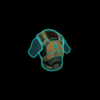
Body Armor
Cost: Free, unlimited copies
+1 HP
The basic armor of the game, auto-equipped to all your xcommies, this game's equivalent of the old pajamas. In theory Body Armor means chipping damage won't automatically put soldiers in the hospital, but only Drones can do 1 point of damage in normal play. (I suppose you might lose a hit point to Thin Men poison and then immediately finish the mission?) In practice Body Armor means that hospitalization times will generally be shorter than whatever you might expect if you have the ranges memorized, and little else.
From a conceptual standpoint, I appreciate that our soldiers are explicitly wearing body armor by default. It's always weird to play a game where soldiers are sent into battle naked, mechanically speaking. I'm just not clear what the gameplay purpose of Body Armor is meant to be.

Carapace Armor
Cost: 25$ and 15 Alien Alloys
+4 HP
Special note: Assault's Extra Conditioning provides an additional +4 HP with Carapace Armor in Enemy Within, just like Titan and Archangel Armor. That means an Assault with Extra Conditioning going from Body Armor to Carapace Armor actually gains 6 HP.
The armor that replaces your basic armor. The Skeleton Suit is far superior, and has no requirements to research beyond Carapace Armor itself being completed. Enemy Within making it benefit more from Extra Conditioning might make it worthwhile over Skeleton Suits in the midgame for Assaults, as your Assaults will be reaching high enough levels to get Extra Conditioning before you get the other +4 HP Armors. Otherwise though, this is cheap, transitional armor, most noteworthy for the fact that it makes your Rookies much less likely to die in one shot. Even then, an additional 3 HP is only a reasonably consistent boost to protection against Sectoids and lower-difficulty Thin Men; the majority of enemies expect to handily eclipse that if they hit at all.

Skeleton Suit
Cost: 30$ and 10 Alien Alloys
+3 HP, +10 Defense, and +3 Mobility.
Has a Grapnel ability, which moves the user to a nearby chosen tile placed higher. The tile must be an edge, and using this ability ends the user's turn.
A ridiculously versatile enhancement to soldiers that radically changes how they play in urban environments, having a much lesser effect on UFO assaults. The Alien Base is somewhere in between for the Grapnel's relevancy. In theory it's a "fast but fragile" choice when compared to Carapace Armor, but the loss of 1 HP is laughable compared to the package of benefits it provides. Functionally, it's essentially superior to Carapace Armor; +10 Defense in particularly is honestly better than 1 extra HP given how lethal successful enemy hits are.
I appreciate it as a gamechanger technology that's less dramatic than, say, Flying Suits in the original XCOM. Your troops view buildings as opportunities much more consistently now, but they're still fundamentally ground-bound troops. It's a nice middle step before Archangel Armor almost completely throws terrain out the window. Snipers, in particular, have basically no reason to not just hang in the air indefinitely, between Squadsight meaning they aren't overly concerned by fuel (Fuel is only consumed on movement, not on turns passing) and Low Profile meaning that Full Cover isn't an incentive to land, so it's nice to not jump straight to flight.
That said, the Grapnel is pretty frustrating in practice. For starters, it's very buggy, where anytime you use it your soldier is at risk of ending up trapped in terrain or sometimes empty space, or simply arriving some place completely different from where you clicked. Even when it doesn't wig out on you, the fact that it ends the soldier's turn entirely is very limiting to it, taking away a lot of potential for cool combat movement. This is pretty frustrating given Thin Men smoothly jumping about exists even in the base game and allows comparable mobility without the bugs and without ending the turn, and gets more blatant in Enemy Within with the introduction of Muscle Fiber Density giving your troops Thin Man jumpy legs; I really wish Enemy Within had reworked the Grapnel into just jumpy leg behavior that happens to use the Grapnel visually when going up. This would've made the whole thing much smoother with minimal loss.

Titan Armor
Cost: 150$, 35 Alien Alloys, and 10 Elerium
+10 HP, immunity to Fire and Poison Immunity. In Enemy Within, also provides immunity to Strangulation
The generic ultimate armor. Boring. Slightly better in Enemy Within, as no other Armor provides immunity to Seeker Strangulation (technically), making it the safest choice, even if it's the least amazing overall. It's unfortunate that the other two non-Psi endgame Armors abruptly gain Fire and Poison immunity, though, as those effects are much more relevant in Enemy Within and it would've solidified Titan Armor's position as the most 'shrug off special effects' armor type. The fact that its unique advantage in Enemy Within is strangulation immunity is kind of iffy given that basically the only reason to not have Bioelectric Skin on everyone is because Mimetic Skin is completely ridiculous -and Mimetic Skin can still be used to protect from strangulation, as Seekers can't strangle what they can't see. Worse yet, Chitin Plating provides strangulation immunity in Enemy Within as well, when it was already a very solid item in the original game. It's actually very hard to argue for using Titan Armor over one of the other endgame Armors, honestly.
Helping offset this point is that it's the cheapest of the end-game armors. The Elerium price tag is particularly notable -its Elerium demand is less than a third of the next cheapest armor, so if Elerium is seriously constraining your ability to manufacture stuff, Titan Armor may well be a worthwhile stopgap measure, even if you've already unlocked all the other advanced armors.
It helps that Psi Armor is the only endgame armor aside from Titan itself that doesn't require Titan Armor be researched first. You'll probably use Titan Armor as a transitional armor, even if it's underwhelming compared to, say, Archangel Armor.

Archangel Armor
Cost: 200$, 50 Alien Alloys, and 35 Elerium
+8 HP, Flight. In Enemy Within, grants immunity to Fire and Poison.
The ultimate in mobility... and, due to how Flight mechanics work, also bizarrely good at providing protection and enhancing offense. Due to Sniper Ability mechanics, it's also very much the Sniper Armor, between Low Profile enhancing flight's Low Cover bonus to a Heavy Cover bonus and Damn Good Ground being pretty much an automatic bonus when using Archangel Armor. In the original it's honestly also the most generically good armor -Fire immunity is functionally handled by flight... and so is Poison immunity! Meanwhile being in the air protects you from Alien Grenades, makes it impossible to flank you, provides 20 Aim against most everything you're fighting by virtue of having the high ground, renders you immune to melee attackers, which includes Seeker strangulation in Enemy Within... flight is insanely useful.
As such, in the original the only thing Titan Armor has over it aside from the price tag is extra HP, and 2 HP just isn't going to stand out that much. Even on Impossible, max-rank soldiers in Archangel Armor will have 15 HP (Bar Snipers, who will have 14) even if they have no other HP bolstering effects, and class abilities tend to exaggerate the problem, not lessen it -Assault's Extra Conditioning provides +4 on Titan Armor both and Archangel Armor, leaving the gap still at 2 HP while it actually means a comparison of 19 HP vs 21 HP, while Sniper's Low Profile takes away one of the only problems with constantly abusing flight and Damn Good Ground makes flight an even stronger advantage.
Enemy Within makes some changes that on paper help complicate things, but in practice don't help so much. Titan Armor picks up Strangulation immunity and Archangel Armor does not, but hanging midair makes a soldier immune to Strangulation, so in practice Archangel Armor is still a source of immunity. Muscle Fiber Density lets a Titan Armor soldier move about more freely than a soldier just flying, but it's not like Adaptive Bone Marrow is meaningfully preferred on Archangel Armor; you can just use Muscle Fiber Density and Archangel Armor for the best of both worlds. Depth Perception gives yet another reason to prefer Archangel Armor, while no other Gene Mod is particularly pertinent to the choice of which Armor to prefer. The introduction of Gas Grenades would have given Titan Armor more appeal, for purposes of letting you toss a Gas Grenade and run right into your own danger zone unaffected, but Enemy Within passed out Poison immunity to all the advanced Armor, so, uh, nope.
I like Archangel Armor overall (Even if it's a little frustrating how poorly Titan Armor is handled in the compare-and-contrast), but I'm not happy with the details of flight mechanics. The fact that being in flight is equivalent to Partial Cover, but impossible to bypass or remove in any way, seems a poor design decision to me, causing flight to actually remove depth from the game. So even though I have no particular issue with Archangel Armor itself, it ends up making the late game a more shallow experience by virtue of granting the player access to the dubiously designed flight mechanics.

Ghost Armor
Cost: 250$, 40 Alien Alloys, and 50 Elerium
+6 HP, +20 Defense, and +3 Mobility. In Enemy Within, grants immunity to Fire and Poison.
Has a Grapnel ability, which moves the user to a nearby chosen tile placed higher. The tile must be an edge, and using this ability ends the user's turn.
Has a Stealth ability, which has 4 charges and doesn't consume any Action Points to activate. Activation renders the user invisible, breaking any Suppression on the user, preventing pods from activating in response to their movement, letting them ignore reaction fire, and preventing enemies from intentionally targeting the unit. This state lasts until the start of your teamm's next turn or until the user performs an offensive action. Shots taken from stealth get +30% to crit chance. (+100% in the base game)
The super Skeleton Suit. Stealth is an amazing benefit of course, though unfortunately it's not a very interesting benefit. Powerful, yes, but not that interesting; the most interesting part of it is the potential to scout for suspected pods without activating them just yet, which I... don't think was really intended? Outside that potential use, Archangel Armor will usually be more useful, but Ghost Armor is nice for your scouts, and in the base game can also be used to guarantee a crit. Striking from stealth still adds crit chance in Enemy Within, but it's just 30%, which isn't nearly as reliable.
It's unfortunate that it's overall more expensive than the Archangel Armor, given the Archangel Armor tends to be the more powerful of the two. Exacerbating the point is that Ghost Armor demands you complete the Alien Base Assault mission, where the tech requirements for Archangel Armor are centered around UFO parts. The common kind, not the Battleship-exclusive stuff. That means it's entirely possible to tech to Archangel Armor first, particularly since arguments can be made for delaying attacking the Alien Base -among other points, doing so ups the tempo of Terror missions, which tends to be considered a bad thing.
If you hit the Alien Base quickly and go for the Hyperwave Decoder ASAP, you're one research away from Ghost Armor, but by a similar token if you get lucky with UFO parts and rush to research Firestorms, you're one step away from Archangel Armor. While the Hyperwave Decoder is necessary to complete the game and, technically speaking, Firestorms aren't, it's questionable whether rushing to the Hyperwave Decoder will have an actual payoff, where rushing to Firestorms means you can take down and loot the tougher Alien ships more easily, reliably, and cheaply compared to burning Modules on getting a regular interceptor to win the fight.
Also, the techs necessary to reach Firestorms unlock Elerium Generators and the Mec-2 suit. So more incentives to incidentally tech toward Archangel Armor.

Psi Armor
Cost: 400$, 20 Alien Alloys, and 40 Elerium
+6 HP, +10 Defense, +2 Mobility, and +20 Will
The armor for when you want maximum psi combat ability. Naturally, it is terrible at anything but bolstering Psi, being flatly inferior to Ghost Armor outside the Will boost. Its Will boost isn't all that worthwhile, unfortunately, as a 20-point shift has little ability to do anything decisive with how psionic abilities are set up. In practice it mostly serves as The Volunteer's armor, specifically ensuring that the Volunteer doesn't, say, fly. This would be more meaningful if the Volunteer was particularly meaningful, which they aren't.
The fact that it's by far the most expensive armor to build makes it even more dubious to actually manufacture anything beyond the one Psi Armor that's arbitrarily necessary to complete the game. On top of that, you're not actually allowed to build one until you've hit the Overseer Ship to jack the Ethereal Device and then researched said device. This means that even if it weren't a less-than-ideal choice for armor, you'd have a very limited window to make use of it.
The core problem is that Will boosts just aren't that necessary or impactful unless you're trying to go for the extreme scenarios -Mind Controlling an Ethereal on Impossible, for instance. I'll be covering this in detail in a later page, but suffice to say, the game is sufficiently generous with soldier base Will scores and the base bonuses to the psionic skills that use Will at all that only Berserkers, Chryssalids, Zombies, Sectoid Commanders, and Ethereals have enough Will to make Will-boosters worth considering to overcome their Will. Second Wave options will generally not change this, or will actually on average make your psionic soldiers even better at the task, too.
----------------------------
Mec Armors
Are limited to Mecs, whom can't use regular Armors. In practice this means Mecs are considerably less versatile and interesting than regular soldiers. All Mec Armors provide the Hardened trait (ie Mecs aren't getting hit by criticals constantly just because they can't use Cover) and immunity to Fire and Poison.
The "tactical sub-systems" (pair of non-primary-weapon choices) are actually added, as you upgrade an existing suit rather than building a whole new one of the higher tier. That is, the Sentinel has access to the Warden's Kinetic Strike Module or Flamethrower in addition to its own Grenade Launcher or Restorative Mist, and the Paladin has access to everything. Specifically, you pick one out of each pair -so a Paladin suit might carry the Kinetic Strike Module, the Grenade Launcher, and the Electro Pulse, all at the same time.
Conversely it's worth noting that you should stack the following costs when looking at the higher tiers. The Paladin costs 200 Meld total, for example, not counting the 10 Meld spent into converting the soldier.
Also note that Mecs don't get a regular Item slot and so cannot make use of the normal Item pool; the 'tactical subsystems' fully replace access to Items for them.
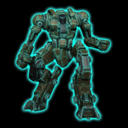
MEC-1 Warden
Cost: 25$ and 40 Meld
+8 HP, +10 Will, and +10 Defense
 Kinetic Strike Module: +3 Mobility, unlimited use melee punch attack that does 12 damage and can be used to destroy Cover/terrain elements. (Can be upgraded to 18 damage with a Foundry Project) As a melee attack, this cannot miss under any circumstances.
OR
 Flamethrower: Cone-shaped attack that does up to 6 damage (Upgradeable to 9 with a Foundry Project) to affected units (Robots are immune, among other examples) and sets the ground on fire. Affected units panic. Two uses per mission. Does not employ accuracy checks, and so never misses.
In summary: your first Mec is more expensive than their own price tag of 10 Meld, and your basic Mec is brutal in close-quarters. Alright.
Interestingly, Flamethrower is more of a supporting tool and Kinetic Strike Module is more of a general upgrade to the Mec itself, as forcing enemies to panic has all kinds of utility but the Flamethrower's damage is only really noteworthy if you hit a group, while Kinetic Strike Module's +3 to Mobility is a direct, generic improvement to the Mec, and the Kinetic Strike Module has no usage limitations. If you can get next to the target, it's completely free, no cooldown or anything.
Unfortunately, Flamethrower runs into the problem that it's effectively competing with Collateral Damage -they're both area of effect attacks that have secondary utility. This is a problem because you automatically have Collateral Damage, Collateral Damage can be used as many times as you want in a mission (You just need to reload between uses), and while Flamethrower does more damage than Collateral Damage (Even with the Particle Cannon, 34% of base is 3 or 4 damage, depending on rounding) damage is really basically the only thing Flamethrower has over Collateral Damage. It's usually going to make more sense to run Kinetic Strike Module and simply count on Collateral Damage to do the things you would've done with the Flamethrower.
Especially since the Kinetic Strike Module can directly help conserve ammo for Collateral Damage, being a completely free attack if you can arrange to be close enough to the target. One that's stronger than your primary attack, at that. Even crits off a Particle Cannon can't beat the Foundry-upgraded Kinetic Strike Module! An additional pain point to Flamethrower is that the Mec has a skill that adds uses to all its limited-use effects, including its main weapon's ammunition... but not the Flamethrower for some reason.
The money cost of the suit is basically a formality, honestly. 25$ isn't nothing, but the Meld price tag of 40 is a lot more likely to hold you back than the money cost.
The 8 HP ensures early Mecs will easily out-HP all but Assaults that are Majors wearing Carapace Armor. (Whom will actually have the same HP, all else being equal) In the long-term the Mec HP advantage over other troops becomes less notable, though still substantive. The innate 10 Defense on the one hand very slightly makes up for the lack of access to Cover (They're effectively in half a Partial Cover), and on the other hand Skeleton Suits and Ghost Armor and Psi Armor all provide Defense boosts without denying use of Cover, so it's still very much the case that Mecs tend to get shot (successfully) more than your other troops, particularly when you consider Full Cover exists. The overall result is that Mecs are relying on that high HP bonus to not die.
The fact that Mecs can't use Cover means you use them very, very differently, and I like that. Where your human soldiers want to be moving from one section of cover to another, and will often go less than their maximum move because their maximum move wouldn't have them ending in Cover, Mecs are going to be concerning themselves primarily with firing lines, whether that means breaking line of sight with an enemy outright to avoid being shot or moving out into the open to be able to take the shot.
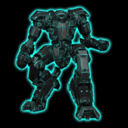
MEC-2 Sentine
Cost: 32$ and 60 Meld
+12 HP, +15 Will, and +10 Defense
 Grenade Launcher: Launches Grenades that do 4 damage. (5 if you've made the Alien Grenades Foundry Project) 2 uses per mission, has a much longer firing range than a non-Mec soldier's throw range with Grenades.
OR
 Restorative Mist: Single-use Medikit that restores 4 HP (6 with the Medikit Foundry Project) to all nearby allies, including the user, and clears Poison from all affected soldiers. Doesn't stabilize critically wounded soldiers.
Now your Mec can either double as a medic (Minus being able to stabilize fallen soldiers) or double as a grenadier. Yep.
... I guess Restorative Mist focuses the Mec on being a supporting piece? I guess?
Thanks to Enemy Within adding Tactical Rigging, modifying Deep Pockets, and improving the Heavy's Grenade specialization skill, a Grenade Launcher Mec is largely inferior to a Grenade-oriented Support or Heavy at Grenading things. Restorative Mist is a bit more interesting, as while it's inferior at single-target healing compared to a Support, the fact that it heals in an area of effect means it's more useful for shrugging off damage affecting multiple units, and in general can end up restoring more HP total than even a medikit-specialized Support in the right circumstances. An obvious example is undoing splash damage from an Alien deciding to lob its grenade.
To be fair, Mecs have a better "throwing arm" than Heavies and Supports. The range might make Grenade Launcher worth considering. Overall, though, I don't see it as a particularly desirable choice. If you want a grenadier who can operate without concerning themselves with cover, the next-best thing is, admittedly, an Assault with Resilience, and even with Resilience the Assault will still be unhappy with not taking advantage of the Defense bonus from Cover, but Restorative Mist doesn't have as much overlap with regular soldiers, regardless. On the other hand, that can be a pro-Grenade Launcher argument -since Restorative Mist fills different niches regarding healing where the Grenade Launcher is fairly indistinguishable from regular Grenade usage, shunting Grenade duty to Mecs can free up your other troops' item slots, where a Restorative Mist Mec or two will still lead to you wanting actual Medikits on your other troops, if only to stabilize the mortally wounded.
The stat bonuses from the Sentinel are surprisingly small of an improvement. A little more Will, and another 4 HP. If you've got Meld to burn, you might as well make the upgrade, but if your Meld stockpiles aren't doing so hot and you've got other things you want to spend it on, you might consider keeping it a low priority, unless you really, really want one of the two abilities it provides.
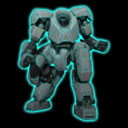
MEC-3 Paladin
Cost: 106$ and 100 Meld
+16 HP, +20 Will, and +10 Defense
 Proximity Mine Launcher: Lobs a mine that does 8 damage when triggered by enemy proximity or other explosives catching it in their radius. 3 per mission by default.
OR
 Electro Pulse: Inflicts 5 damage to all units, friend or foe, within a radius around the Mec, and also stuns robots for one turn. 2 turn cooldown.
Lastly, your Mec throws in a utility effect, one short-ranged, one more roundabout. They both involve risk of friendly fire.
Electro Pulse has an odd mechanic: mind controlled aliens don't shardify their weaponry if killed by alien fire... or if killed by Electro Pulse. As an area of effect attack, it also ignores damage reduction, which synergizes well with its effectiveness against robotic enemies, as Sectopods and Mectoids (both robots) are the only enemies in the game that have damage reduction effects.
I find the two different abilities interesting, but I'm unsure what kind of choice is really being made in practice. Defensive play isn't much of a thing in the game, so mines are closer to being extra-powerful grenades that are slightly less convenient to activate than anything else, while Electro Pulse's main point of clear interest is that it temporarily disables robots.
Proximity Mine Launcher is a further reason why I consider Grenade Launcher a somewhat dubious choice, though it's an admittedly somewhat unfair comparison point. Electro Pulse is also obviously very useful for dealing with the powerful robot enemies of the game -which is all the robots that aren't Drones. Buying turns to get to safety or pump out damage is obviously excellent. The potential to capture more Alien gear, though a bit finicky to make happen, is still nice to have if you've got good psi guys anyway, and it does have the advantage that unlike the Arc Thrower the Electro Pulse will never randomly fail. Muton Elites are a noteworthy possibility -they're your only source of Heavy Plasmas, they have terrible Will, and they have high enough HP that it can be a pain to successfully arrange an Arc Thrower capture. It may well be easier to bring them down to Electro Pulse range and Mind Control them, depending on how your run is going.
As with the second suit, the stat bonuses are a pretty small increase over the previous suit, while the suit is fairly expensive. Again, if you want one of the abilities, get upgrading, but if you don't and have other ways to spend your Meld, those other uses might be better to prioritize.
Armor is one point I feel this entry overall does better than the original XCOM. In classic XCOM, there were three types of armor (Four if you counted not equipping your soldiers with anything), and they were a simple progression of quality, with the ultimate armor throwing in unlimited flight ability for free. This... wasn't very interesting. The main reason it was an at all difficult choice was that a soldier who died took their armor with them -which was fairly unusual for the game. Other gear was only destroyed if it was hit with explosives, and even then it had to actually be on the ground at the time. A soldier killed with explosives would actually have all their gear intact -except the armor. As such, in the original game the primary difficult decision regarding armor was how much in the way of resources you were willing to spend, taking into account the risk of those resources being promptly destroyed by enemy action. Some players simply refuse to give any armor to their inexperienced soldiers, while others give the lowest tier of armor and no higher until the soldiers are sufficiently experienced. That kind of thing.
In this entry, there's instead four "lanes" of armor: tough but generic (Basic, Carapace, Titan), mobility (Skeleton Suit, Ghost Armor), flight (Archangel Armor), and psi. (Psi) Only "generic" and "mobility" have more than one representative, but the key point is that endgame armor is actually between four different choices. I wish those four different choices were a bit more distinct and a bit more equal in viability, but this is still far more interesting than the original XCOM's single lane of increasing quality.
--------------------------------
Next time, Items.
See you then.